








Quick Answer
Do blue light glasses work?
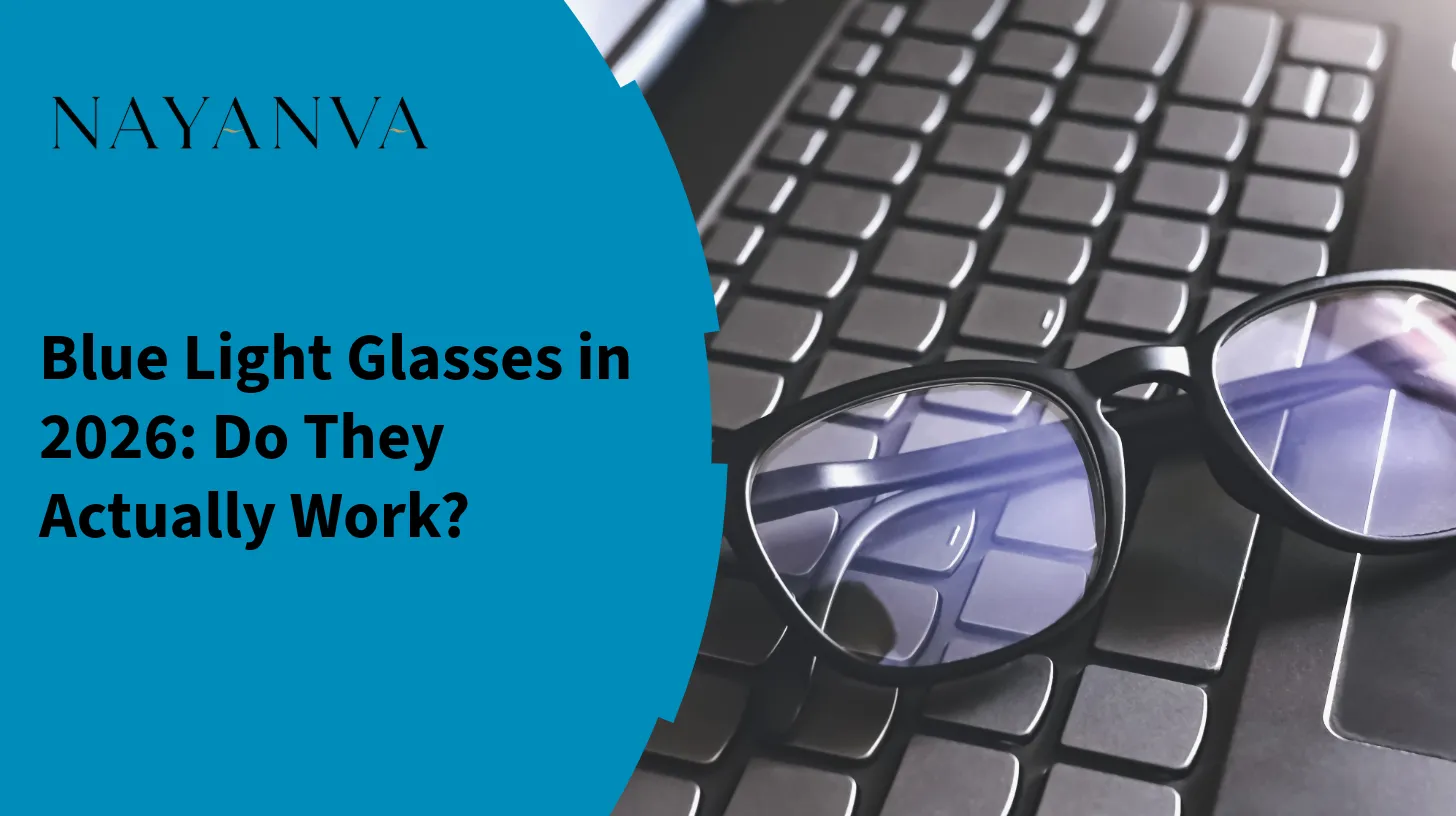
The answer is: partly, and it depends on what you expect them to do. Blue light glasses do filter a portion of high-energy blue light from digital screens – typically 10 to 30 percent in clear lenses, more in amber-tinted ones. Clinical evidence for reducing eye strain is mixed at best. However, wearing them in the evening before bed may help your body’s sleep cycle. They cause no harm and offer some users genuine comfort. Whether they work for you depends on your screen habits, your specific symptoms, and the quality of the lenses.
What Exactly Is Blue Light?
Before we judge the glasses, we need to understand what they’re fighting against.
Blue light is a portion of the visible light spectrum with wavelengths roughly between 380 and 500 nanometers. It is high-energy visible (HEV) light – meaning it carries more energy per photon than, say, red or green light. The sun is the biggest source of blue light in your life by a factor of thousands. Digital screens – your phone, laptop, tablet – emit blue light too, but at a fraction of the intensity of natural daylight.
Here’s the part most people miss: your eyes evolved under a sky full of blue light. Your cornea, lens, and retina have handled it for hundreds of thousands of years. The concern isn’t really about whether blue light damages your eyes – most ophthalmology organizations, including the American Academy of Ophthalmology, have explicitly stated there is no scientific evidence that screen-emitted blue light causes permanent eye damage.
The real question is: does the specific blue light from screens – combined with the way we use screens – cause short-term discomfort? And here, the story gets more nuanced.
Why Your Eyes Hurt After Screen Time (And Why Blue Light Might Not Be the Main Villain)
You’ve felt it. Four hours into a work session or a binge-watch, your eyes start to ache, dry out, blur at the edges. You assume it’s the screen. You assume it’s the light. But the truth is more interesting than that.
The condition is called Computer Vision Syndrome (CVS) – or digital eye strain – and it affects a surprisingly large number of screen users. A study conducted among university students in India found that nearly 46% reported symptoms of digital eye strain during regular device use. That’s almost one in two students.
But what’s actually causing those symptoms? Research consistently points to a few main culprits:
- Reduced blinking. When we stare at screens, we blink about one-third as often as normal. Less blinking means less tear distribution across the eye surface. Dryness, irritation, and that gritty feeling follow.
- Sustained near-focus. Your eye muscles work constantly to maintain focus at screen distance. Do that for hours and they fatigue, just like any overworked muscle.
- Poor screen ergonomics. Wrong screen distance, bad posture, glare from ambient lighting – all of these add strain.
- Uncorrected or outdated prescriptions. Many people are using screens with glasses or contact lenses that no longer quite match their vision needs.
Blue light is a factor in this picture – but likely not the starring role it’s been given in most marketing copy. A 2024 American Academy of Ophthalmology assessment found blue light to be a minor contributor to digital eye strain compared to the factors listed above.
So What Does the Science Actually Say About Blue Light Glasses?
Let’s be fair to the research – it’s genuinely mixed, not definitively negative.
What major reviews have found:
A landmark Cochrane review, widely referenced in 2025 and 2026, examined clinical trials on blue-light filtering spectacle lenses. Its conclusion: these lenses do not significantly reduce eye strain or improve sleep quality compared to standard lenses in most users. The College of Optometrists reached a similar finding.
But here’s the nuance:
A 2025 peer-reviewed study surveyed 186 adults who had worn blue-filter lenses consistently for over a year. Eighty-five percent reported reduced symptoms – dryness, fatigue, irritation. The catch: this was self-reported data without a control group, so the study couldn’t prove the glasses caused the improvement. Interestingly, the strongest predictors of improvement were following the 20-20-20 rule and limiting screen time – not the glasses themselves.
Where the science is more convincing: sleep.
Blue light has a documented relationship with melatonin suppression. Studies, including Harvard research and a 2024 study published in Chronobiology in Medicine, confirm that evening blue light exposure disrupts circadian rhythms by suppressing melatonin – the hormone that signals your body it’s time to sleep. Wearing blue-blocking glasses in the two hours before bed, especially amber-tinted ones, appears to have more genuine scientific backing than wearing them during the workday.
What This Means in Plain Terms
| Claim | Evidence Level |
| Reduces digital eye strain during the day | Weak to moderate – mixed clinical results |
| Improves sleep if worn in the evening | Moderate – reasonable scientific support |
| Prevents permanent eye damage from screens | Not applicable – screens don’t cause this |
| Reduces headaches and dryness for some users | Anecdotal but widely reported |
| Safe to wear daily | Yes – no known risks |
The Placebo Effect Is Real, and That’s Okay
Here’s something worth saying out loud: if you wear blue light glasses and feel better, that’s not nothing.
A significant portion of reported benefits likely involve the placebo effect – or more precisely, what researchers call increased behavioral awareness. When someone buys blue light glasses, they also tend to take more breaks, blink more consciously, adjust their screen distance. The glasses become a cue to care for their eyes. The comfort improvement is real, even if the glasses themselves weren’t the primary cause.
This isn’t a trick or a failure. It’s how a lot of health interventions work. The glasses become part of a better eye-care habit, and that habit pays off.
Who Should Actually Consider Blue Light Glasses in 2026?
Not everyone needs them. But some people have more reason to try them than others.
You might genuinely benefit if you:
- Work 8 or more hours a day on a screen, especially in office lighting
- Regularly use your phone within an hour of sleeping and notice difficulty falling asleep
- Are a student going through exam season with heavy laptop and phone use
- Suffer from migraines or light sensitivity (photophobia)
- Have kids who spend significant time on devices and are showing signs of eye fatigue
You probably don’t need them if:
- You only use screens for a couple of hours a day
- Your existing anti-reflective glasses are already managing screen glare well
- You have an up-to-date prescription that’s properly suited for screen distance
- You’re looking for a cure for eye strain but haven’t tried habit-based fixes first
India-Specific Context: Why This Matters More Here
India’s screen time trajectory has been steep. The post-pandemic shift to hybrid work, the growth of ed-tech for students, and the explosion of short-form video consumption have combined to push average daily screen time significantly higher. For Indian students specifically – many of whom now attend online classes, consume YouTube tutorials, and unwind with OTT platforms all on the same day – cumulative screen exposure can easily cross eight to ten hours.
The India eyewear market is also experiencing a boom in blue light lens adoption, driven largely by e-commerce. The Asia-Pacific region, including India, is projected to grow fastest in the blue light glasses segment through 2034, driven by rising smartphone penetration and awareness of eye health. But consumer awareness hasn’t always kept pace with marketing claims. Many buyers in India end up purchasing low-quality blue light glasses that filter only a trivial percentage of blue wavelengths – and then wonder why they don’t feel any different.
What to look for when buying:
- Clear lenses should filter at least 20-30% of blue light; amber lenses will filter more but affect colour perception
- Look for lenses that specify the wavelength range they target (415-450nm is the key range)
- Anti-reflective coating should be included – often more practically useful than the blue light filter itself
- Prescription blue light glasses are available and worth considering if you already need vision correction
- Avoid sellers who make dramatic medical claims without any lens certification or test data
Common Myths About Blue Light Glasses – Busted
Myth 1: Blue light glasses will fix my eye strain. Not on their own. Eye strain is mostly a habits problem. The glasses are one tool in a broader solution that includes breaks, blinking consciously, screen distance, and good lighting.
Myth 2: Blue light from screens damages your retina. No credible scientific body currently supports this claim for the light levels that consumer devices emit. Lab studies showing cell damage used intensities far higher than any consumer screen produces.
Myth 3: More yellow tint = more protection. Stronger tinting does filter more blue light, but it comes at the cost of colour distortion. For most users, clear or lightly tinted lenses strike a better balance for daytime use.
Myth 4: Kids don’t need them. Children’s eyes are still developing and are more sensitive to light. If your child spends significant time on devices, a quality pair with appropriate filtration is worth considering – alongside firm screen time limits.
Myth 5: Night mode on your phone makes blue light glasses unnecessary. Night mode (or warm display settings) reduces blue light emission from the screen, which helps. But it doesn’t eliminate it, and it doesn’t help with overhead LED lighting or ambient light exposure. Both can complement each other.
The 20-20-20 Rule: Often More Effective Than Any Lens
Before spending money on specialised eyewear, this is the first thing any eye care professional will tell you – and it’s free.
Every 20 minutes, look at something 20 feet away for 20 seconds.
That’s it. This simple habit breaks the sustained near-focus your eye muscles are locked into during screen work. It also encourages blinking. Studies consistently show that adherence to the 20-20-20 rule is one of the strongest predictors of reduced digital eye strain – more so than the type of glasses someone wears.
Combine this with:
- Blinking intentionally during screen use
- Keeping screens at arm’s length (roughly 50-70 cm)
- Using lubricating eye drops if dryness persists
- Getting your prescription checked – especially if you’re over 35
Buying Guide: How to Choose the Right Blue Light Glasses in India
If you’ve decided to try them, here’s how to make a smart purchase.
| Factor | What to Look For |
| Lens coating | Anti-reflective + blue light filter combined |
| Filtration level | At least 20% for clear lenses; 50%+ for evening use |
| Wavelength target | 415-450nm range (violet-blue) is the primary concern |
| Frame fit | Proper fit reduces reflections from the lens edges |
| Prescription option | Available if you need vision correction; worth combining |
| Certification | Look for brands that provide lab test data on their filtration |
| Tint for daytime vs. evening | Clear or light tint for work; amber tint for pre-sleep use |
Understanding your specific vision needs – your screen distance, your hours of use, your existing prescription – is the foundation of any good eyewear choice. Choosing lenses without that context is guesswork.
A Soft Word on Choosing Wisely
If you’re exploring new eyewear for screen comfort, the lens technology matters – but so does the frame, the fit, and whether the glasses actually suit your face and lifestyle. A pair of blue light glasses you enjoy wearing is always more effective than a technically superior pair sitting in a drawer.
Think about your daily routine: when are your eyes most strained? Is it during a long work session, or in the hour before sleep? The answer should guide what kind of lenses you choose. And regardless of lens type, pairing any new eyewear with better screen habits will always give you better results than lenses alone.
The Future of Blue Light Eyewear: Where Things Are Headed
The blue light glasses market is evolving fast. The global market was valued at around $2.9 billion in 2024 and is projected to nearly double by 2034. But the products are getting smarter too.
Newer developments include:
- Precision filtration lenses that target specific harmful wavelength bands without the yellow tint
- Photochromic blue light lenses that adapt to both indoor and outdoor light conditions
- Smart glasses with built-in blue light filters – a rapidly growing category as wearable tech matures
- Prescription + blue light combinations that let users address both vision correction and screen comfort in one lens
In India specifically, as the eyewear e-commerce space grows, access to well-made blue light glasses at reasonable price points is improving. The days of choosing between good-looking frames and functional lenses are fading.
Conclusion: The Honest Answer
Blue light glasses are not magic. They won’t undo the effects of a 12-hour screen marathon, and clinical science hasn’t definitively proven they outperform standard lenses for daytime eye strain. If you’re expecting a silver bullet, you’ll probably be disappointed.
But they’re also not a scam. For many people – especially those who use screens in the evening, those with light sensitivity, students during exam season, and anyone whose sleep schedule has suffered since their screen time went up – they offer real, practical benefits. And they’re completely safe.
The smarter question to ask isn’t do blue light glasses work? It’s what am I trying to fix, and is this the right tool for that problem?
If your eyes ache during the day: start with the 20-20-20 rule, your screen distance, and an eye test. If you struggle to sleep after late-night screen use: amber-tinted or strong blue-blocking lenses in the evening are genuinely worth trying. If you want an easy daily habit that might help and definitely won’t hurt: clear blue light lenses are a reasonable choice.
Your eyes deserve more than just good-looking frames. They deserve thoughtful choices.
Do blue light glasses actually reduce eye strain?
The scientific evidence is mixed. Major reviews, including a Cochrane review, found no significant clinical benefit for daytime eye strain in most users. However, many individuals report reduced fatigue and dryness – this may be linked to improved habits triggered by wearing the glasses rather than the filter itself. For sleep-related benefits, the evidence is more supportive.
Can I wear blue light glasses all day?
Yes. Blue light glasses are safe for all-day wear and pose no known risks to eye health. Some users with clear lenses report no noticeable change in colour perception, while stronger amber tints may affect how colours appear. Choose your tint level based on how and when you plan to use them.
Are blue light glasses good for students in India?
Students who spend 8+ hours daily on devices – studying, attending online classes, and unwinding on phones – are a strong candidate group. The glasses won’t replace breaks or healthy screen habits, but they can form part of a broader eye-care routine. Younger eyes are also more sensitive to light, which is worth considering.
Do blue light glasses help with sleep?
This is where the science is most supportive. Blue light suppresses melatonin, the hormone that regulates your sleep cycle. Wearing blue-blocking glasses (especially amber-tinted ones) in the 1-2 hours before bed can help your body begin producing melatonin on schedule, potentially making it easier to fall asleep.
What’s the difference between anti-glare glasses and blue light glasses?
Anti-glare (or anti-reflective) glasses reduce reflected light from lens surfaces and ambient lighting – useful for reducing visual noise and eye fatigue. Blue light glasses specifically filter a portion of the blue wavelength range. Many quality computer glasses now combine both – anti-glare coating plus blue light filtration – and this combination tends to be more effective than either alone.
How much blue light do these glasses actually block?
Most clear blue light glasses block between 10 and 30% of blue light emitted by screens. Amber or yellow-tinted lenses can block 50% or more but affect colour perception. The percentage varies significantly by brand and lens quality – look for brands that provide lab-tested filtration data rather than vague marketing claims.
Is night mode on my phone enough – do I still need glasses?
Night mode helps by reducing blue light emission from your screen. But it doesn’t address blue light from overhead LED lighting, other screens nearby, or ambient sources. For moderate screen users with no sleep complaints, night mode may be sufficient. For heavy users or people with active sleep issues, blue light glasses in the evening offer additional protection.
Can children use blue light glasses?
Yes, and there’s a reasonable case for it. Children’s eyes are still developing and more sensitive to high-energy light. If your child spends significant daily time on screens for school or entertainment, good-quality blue light glasses – combined with enforced screen breaks and device-free time before bed – are a sensible precaution.
Are expensive blue light glasses better than cheap ones?
Often, yes – but not always because of the blue light filter. More expensive glasses tend to have better anti-reflective coatings, more accurate filtration of the right wavelength range, better lens materials, and frames that fit properly (reducing edge glare). Very cheap blue light glasses may filter only a negligible amount of blue light and have low-quality coatings that cause more visual distortion than they resolve.
I already wear prescription glasses. Can I get blue light lenses in my prescription?
Absolutely – and this is usually the best approach for anyone who already wears prescription glasses. You can add blue light coating or get blue light filtering incorporated into your prescription lenses. This way, you’re addressing both vision correction and screen comfort simultaneously, without having to wear glasses over glasses or switch between pairs.
My eyes feel fine at a computer. Should I still get blue light glasses?
If you’re genuinely comfortable and have no sleep complaints linked to screen use, you probably don’t need them. Your current habits and setup are working. You might still consider them as a preventive measure if your screen time is set to increase significantly, or if you spend a lot of time on screens in the evening.
Do blue light glasses help with migraines or headaches from screens?
For some people, yes. Light sensitivity (photophobia) is a common migraine trigger, and some migraine sufferers find that blue light filtering lenses reduce the frequency or intensity of screen-triggered headaches. If you experience regular headaches after screen use, consult an eye care professional – the cause may also be an uncorrected prescription, dry eyes, or monitor glare, all of which have targeted solutions.
This article is for informational purposes only and does not constitute medical advice. Please consult a qualified eye care professional for personalised guidance.
We strive to keep our content accurate and up to date, but information may change over time. Please verify important details with official sources or eye care professionals.
