











An oblong face and a rectangle face get mixed up constantly, and honestly, the eyewear advice for both overlaps quite a bit. The distinction that actually matters: an oblong face is long with fairly straight sides, but the jaw stays soft and rounded rather than developing the more visible corners you’d see on a rectangle face. Everything else – forehead, cheekbones, jaw – sits close in width, with length clearly winning out over width.
The core challenge is the same either way: the face needs width, not more length or height. A tall, narrow frame just adds to a problem that’s already there.
Quick version: an oblong face is long, with straight sides, a soft jawline, and similar width across the forehead, cheekbones, and jaw. Frames that are wider than they are tall – oversized, round, or bold horizontal shapes – help shorten the face visually. Small, narrow, or tall frames stretch it further.
Table of Contents
- Recognizing an Oblong Face
- Width First, Always
- Frames Worth Trying
- Frames Worth Skipping
- What the Right Frame Does for You
- What the Wrong One Does Against You
- Comparison Table
- A Few Styling Notes
- How to Actually Shop This Shape
- Mistakes Worth Avoiding
- FAQs
- Final Word
- Sources
Recognizing an Oblong Face
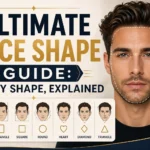
An oblong face is longer than it is wide, with straight sides running from forehead to jaw and a soft, rounded jawline rather than a sharply defined one. Forehead, cheekbone, and jaw width tend to be close together, with the length of the face being the standout feature.
Quick check: compare face length to face width, and pay attention to the jaw specifically. If the sides run fairly straight and the jaw curves softly rather than showing a visible angle, and the face is noticeably longer than it is wide, oblong is likely your shape. If the jaw feels more angular, you might be looking at a rectangle face instead – the advice here still mostly applies.
Width First, Always
The single biggest factor with an oblong face is proportion, not angularity. Since the face is already long, the last thing it needs is a tall, narrow frame that emphasizes that length even more. What actually helps is width – a frame wider than it is tall, which interrupts the vertical emphasis and brings the proportions back toward balance.
Almost every recommendation in this guide comes back to that one idea: width over height, every time.
Frames Worth Trying
Oversized round or square frames. Big, wide shapes counter a long face’s proportions directly, adding horizontal emphasis exactly where it’s needed.
Wayfarers. Broad at the top, versatile enough for daily wear, and wide enough to interrupt the length without looking out of place.
Frames with decorative temples. Extra detail or color at the sides draws the eye outward, reinforcing width in a way a plain frame doesn’t.
Low or double-bridge frames. These add horizontal visual interest right through the middle of the face, breaking up an otherwise long, uninterrupted profile.
Frames with a slight curve at the top edge. A bit of curve softens what would otherwise be a long, straight line running the length of the face.
Nayanva’s oversized and wayfarer collections work particularly well here, since both are built around wider-than-tall proportions.
Frames Worth Skipping
Small, narrow frames are the clearest miss – they simply don’t add the width this face shape needs, and can make the face look even longer by contrast. Tall frames with significant vertical lens height add to the length problem rather than solving it. And plain, understated temples miss an easy opportunity to add visual width at the sides of the face.
What the Right Frame Does for You
A wide, well-proportioned frame visually shortens the face and adds the balance an oblong face doesn’t have naturally. It softens an otherwise long, uninterrupted profile and tends to look more proportioned in photos, where length can be exaggerated even further by camera angle.
What the Wrong One Does Against You
Narrow frames simply add to the existing length problem. Tall, vertical shapes do the same from a slightly different angle. And frames without any width or detail at the temples miss a straightforward chance to balance out the face’s natural proportions.
Comparison Table
| Frame Style | Best For | Why It Works |
|---|---|---|
| Oversized round/square | Statement looks | Adds width at the widest point of the frame |
| Wayfarer | Casual to semi-formal | Broad shape interrupts a long face’s length |
| Decorative temples | Added personality | Draws the eye outward, reinforcing width |
| Double-bridge | Distinctive styling | Adds horizontal interest through the middle |
| Slight curve at top edge | Everyday softening | Breaks up a long, straight profile |
| Small/narrow | Skip these | Add to the face’s existing length |
A Few Styling Notes
Always compare width to height when choosing a frame – you want wider, not taller, every time with this face shape. Bold colors and temple detail both help reinforce the horizontal emphasis that actually flatters an oblong face. If your hair adds volume at the sides already, a slightly smaller frame can still work, since the hair is doing some of the width-adding work already. And where you have the option, choose frames with a bit of curve rather than perfectly straight lines – it softens an otherwise long profile nicely.
How to Actually Shop This Shape
Start by comparing face length to width – an oblong face reads clearly longer, with straight sides and a soft jaw. From there, prioritize oversized, wayfarer, or decorative-temple frames over anything small or narrow. Check the width-to-height ratio of any frame you’re considering; wider than tall is the goal here, without exception. If you’re shopping for sunglasses, oversized round or square shapes both work well, since sun styles can lean bigger without looking unnatural. And try frames alongside your usual hairstyle, since hair volume at the sides changes how much width a frame actually needs to add.
Mistakes Worth Avoiding
Choosing small or narrow frames because they seem more understated, when understated is exactly the wrong direction here. Picking tall, vertical lens shapes that stretch the face further instead of shortening it. Overlooking temple width and detail, which is one of the easiest ways to add the width this face shape benefits from. And assuming oblong and rectangle face advice are identical – the softer jaw on an oblong face can actually handle slightly rounder, softer frame shapes than a rectangle face would.
What glasses actually suit an oblong face?
Oversized round or square frames, wayfarers, and anything with decorative temples tend to work best because they add width that counters the face’s length.
How do I know if my face is oblong?
If your face is clearly longer than it is wide, with straight sides and a soft, rounded jaw, you likely have an oblong face shape.
What’s the difference between oblong and rectangle face shapes?
Both are long with straight sides, but an oblong face has a softer, more rounded jawline, while a rectangle face tends to have a more defined, slightly angular jaw.
Should I avoid narrow frames?
Generally, yes – narrow frames don’t add the width an oblong face needs and can make it look even longer by comparison.
Are oversized frames a good choice here?
Yes, one of the best options – the added width directly counters the face’s natural length.
What frame colors work best on an oblong face?
Bold colors and detail at the temples both help reinforce the horizontal width this face shape benefits from.
Can I wear wayfarer glasses with an oblong face?
Yes, they work well – the broad top line adds width without looking oversized or unnatural.
What’s the biggest mistake people with oblong faces make?
Choosing small or narrow frames, which add to the length problem instead of solving it
Does this apply to sunglasses too?
Yes – oversized round or square sunglasses tend to work particularly well, since sun styles can lean bigger without looking out of place.
Are double-bridge frames worth considering?
Yes, they add horizontal visual interest through the middle of the face, which helps break up an otherwise long, uninterrupted profile.
Final Word
An oblong face is fundamentally a length-versus-width issue – the straight sides and extended proportions need a frame that adds width rather than height. Oversized, wayfarer, and decorative-temple frames all handle this well, while small or narrow frames tend to stretch the face further instead of balancing it. Keep width as the priority, add a bit of curve where you can, and the proportions come together nicely.
This article is for informational purposes only and does not constitute medical advice. Please consult a qualified eye care professional for personalised guidance.
We strive to keep our content accurate and up to date, but information may change over time. Please verify important details with official sources or eye care professionals.

[…] Buying Guide July 9, 2026 Best Sunglasses for Oval Face: Complete Buying Guide July 9, 2026 Best Glasses for Oblong Face Shape: Complete Guide July 9, 2026 Best Glasses for Triangle Face Shape: Complete Guide July 9, 2026 Best Glasses […]