








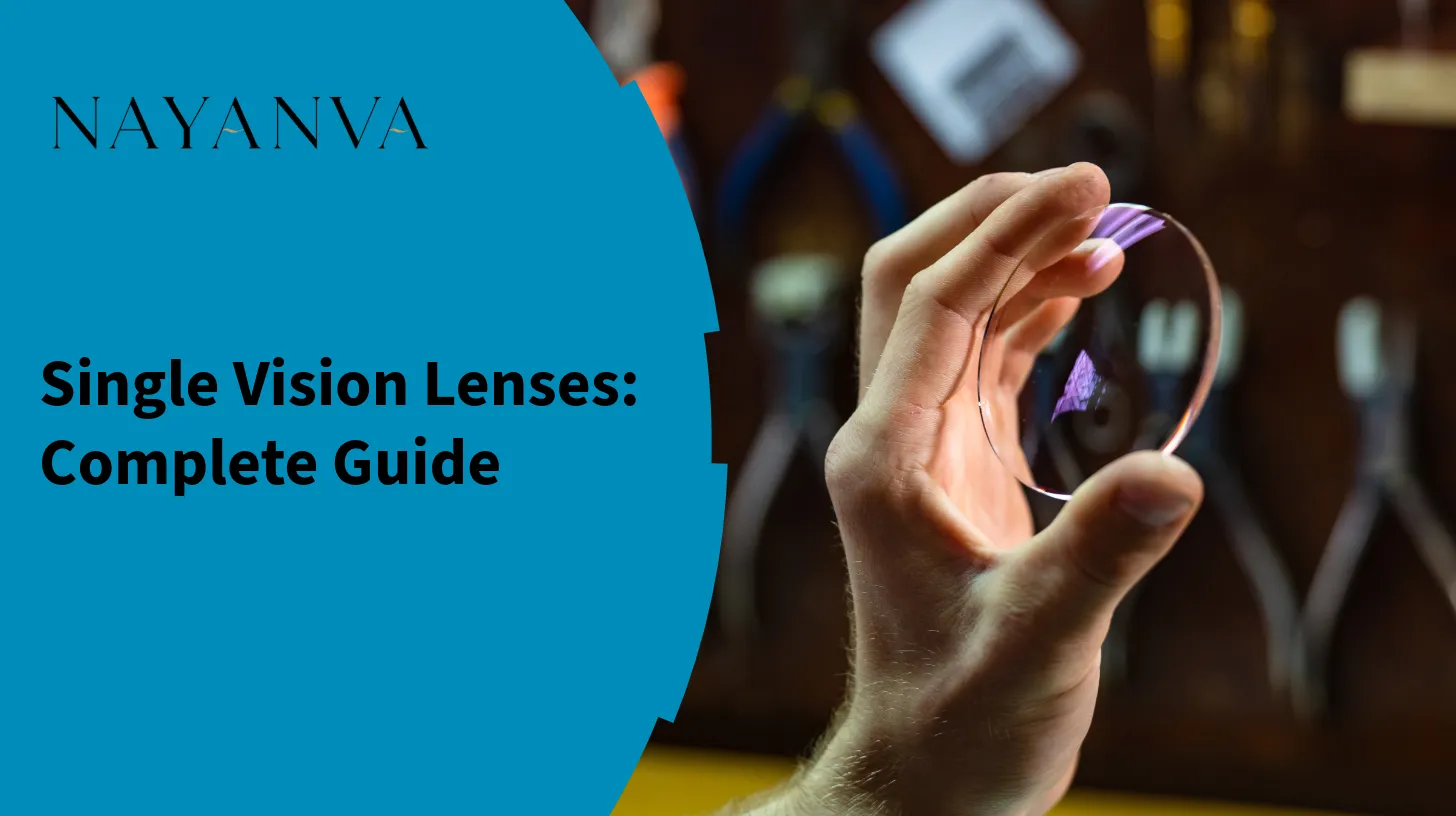

Single vision is the most common type of prescription lens by a wide margin, and also the one that generates the fewest questions – probably because it’s the most straightforward option available. One prescription, one correction zone, no transition lines or focal gradients to think about. But “simple” doesn’t mean there’s nothing to decide; lens material, coatings, and index all still matter quite a bit even within a single vision prescription.
This guide covers what single vision actually means, who it’s suited for, and the practical decisions that go into choosing a good pair.
Quick version: single vision lenses correct for one distance only – either near (reading, close-up work) or far (general distance vision), not both simultaneously. They’re the standard choice for anyone without presbyopia or another need for multi-distance correction, and they’re generally the most affordable and straightforward lens option available.
Table of Contents
- What Single Vision Actually Means
- Who Single Vision Lenses Are For
- Single Vision vs. Progressive vs. Bifocal
- Common Vision Conditions Corrected by Single Vision
- Lens Material Options
- Coatings Worth Considering
- Comparison Table
- Buying Guide
- Common Mistakes
- FAQs
- Final Verdict
What Single Vision Actually Means
A single vision lens has one consistent focal power across the entire lens, correcting for a single distance range – either close-up (near vision) or general distance vision, but not both in the same lens. This is different from multifocal lenses like progressives or bifocals, which combine multiple focal powers into a single lens to correct for more than one distance at once.
Who Single Vision Lenses Are For
Single vision lenses are the standard choice for most people with refractive errors like myopia (nearsightedness), hyperopia (farsightedness), or astigmatism, as long as presbyopia or another multi-distance need hasn’t entered the picture. They’re also commonly used for dedicated reading glasses, computer glasses set to an intermediate focal distance, or any situation where correction at just one distance is genuinely what’s needed.
Single Vision vs. Progressive vs. Bifocal
Single vision corrects one distance with one consistent power throughout the lens. Bifocal corrects two distances with a visible dividing line between zones. Progressive corrects a full range of distances with a smooth, gradual transition and no visible line. The right choice comes down to whether your vision needs correction at just one distance or multiple – something your optometrist can determine based on your prescription and how your vision changes at different distances.
Common Vision Conditions Corrected by Single Vision
Myopia (nearsightedness): distant objects appear blurry while close-up vision remains clear; single vision lenses correct this with a specific negative-power prescription.
Hyperopia (farsightedness): close-up objects appear blurry while distance vision may remain relatively clear; corrected with a positive-power prescription.
Astigmatism: irregular curvature of the cornea or lens causes blurred or distorted vision at various distances; corrected with a cylindrical lens component alongside standard spherical correction.
Each of these can be addressed with single vision lenses as long as presbyopia or another multi-distance need isn’t also present.
Lens Material Options
Standard plastic (CR-39): a widely used, cost-effective option with solid optical clarity, though thicker than premium materials at higher prescriptions.
Polycarbonate: more impact-resistant and thinner than standard plastic, often recommended for children, safety eyewear, and sports use.
High-index plastic: thinner and lighter than standard plastic, particularly beneficial for stronger prescriptions where standard lenses would otherwise be noticeably thick.
Trivex: similar impact resistance to polycarbonate with generally better optical clarity, a solid middle-ground option for many wearers.
Coatings Worth Considering
Anti-reflective coating reduces glare and reflections, which many people find improves both comfort and appearance. Scratch-resistant coating adds durability, worth considering for anyone hard on their glasses day to day. UV coating blocks ultraviolet rays, relevant even for indoor lenses given UV exposure through windows and screens. And blue light filtering coatings are worth considering if screen time is a significant part of your day, discussed in more depth in our dedicated blue light glasses guide.
Comparison Table
| Lens Material | Thickness | Impact Resistance | Best For |
|---|---|---|---|
| Standard plastic (CR-39) | Standard | Moderate | Budget-conscious, mild prescriptions |
| Polycarbonate | Thin | High | Children, sports, safety eyewear |
| High-index plastic | Thinnest | Moderate | Strong prescriptions |
| Trivex | Thin | High | Balance of clarity and durability |
Buying Guide
- Confirm your prescription is current – single vision prescriptions should generally be updated every one to two years, or as recommended by your optometrist.
- Choose lens material based on your prescription strength – stronger prescriptions benefit more from high-index materials to avoid excessive thickness.
- Add coatings based on your lifestyle – anti-reflective for screen use, scratch-resistant for active daily wear, UV protection for time outdoors.
- Consider frame style separately from lens choice – single vision lenses work in virtually any frame shape or size, unlike progressives, which need more vertical height.
- Ask about blue light filtering if screens are a significant part of your daily routine.
Common Mistakes
Assuming single vision means a lower-quality or less capable lens, when in reality it’s simply the appropriate correction type for anyone without a multi-distance vision need. Skipping useful coatings like anti-reflective or scratch-resistant to save a small amount of money, then dealing with glare or scratched lenses down the line. Choosing standard plastic for a strong prescription without considering high-index alternatives, resulting in unnecessarily thick lenses. And not updating an outdated prescription, assuming the same single vision lenses will remain accurate indefinitely.
FAQs
What are single vision lenses?
Lenses that correct for one distance only – either near or far – with a consistent focal power across the entire lens.
Do I need single vision or progressive lenses?
This depends on whether your vision needs correction at just one distance or multiple; your optometrist can determine this based on your prescription and how your near and distance vision compare.
Are single vision lenses cheaper than progressive lenses?
Generally yes – single vision lenses are typically less expensive than progressive or bifocal lenses due to their simpler design and manufacturing process.
Can single vision lenses correct astigmatism?
Yes, single vision lenses can include a cylindrical correction component specifically for astigmatism alongside standard spherical correction.
What’s the best lens material for a strong prescription?
High-index plastic is generally recommended for stronger prescriptions, since it stays thinner and lighter than standard plastic at higher powers.
Do children need special lens materials for single vision glasses?
Polycarbonate is commonly recommended for children due to its high impact resistance, which matters more for an active, growing child.
How often should I update my single vision prescription?
Generally every one to two years, or as recommended by your optometrist based on your specific vision and any changes you’ve noticed.
Can I use single vision lenses as computer glasses?
Yes, single vision lenses can be set to an intermediate focal distance specifically for screen use, which some people find more comfortable than standard distance or reading prescriptions for computer work.
What coatings should I add to single vision lenses?
Anti-reflective, scratch-resistant, and UV coatings are commonly recommended, with blue light filtering worth considering for heavy screen users.
Is single vision the right choice if I’m only just starting to notice reading difficulty?
Possibly, but if you’re also noticing distance vision changes or approaching the age range where presbyopia commonly develops, it’s worth discussing multifocal options with your optometrist as well.
Final Verdict
Single vision lenses remain the standard, most straightforward option for the majority of people with refractive vision needs, and there’s no inherent downside to choosing them when they match your actual vision requirements. The real decisions worth spending time on are lens material and coatings, both of which meaningfully affect comfort, durability, and appearance regardless of how simple the underlying prescription type is.
This article is for informational purposes only and does not constitute medical advice. Please consult a qualified eye care professional for personalised guidance.
We strive to keep our content accurate and up to date, but information may change over time. Please verify important details with official sources or eye care professionals.
