













How to choose eyeglass frames for your face shape simple rules, comparisons, and tips to find frames that actually flatter you.
Introduction
You’ve tried on fifteen pairs of glasses and somehow none of them look quite right. Maybe they make your face look longer than it is, or rounder, or just… off. This happens more often than people realize, and it’s rarely about the glasses being bad — it’s usually about frame shape not matching face shape. Once you know your face shape and the basic rules that go with it, choosing frames stops being guesswork and starts being simple. This guide walks through every major face shape, what frames actually work for each, and how to figure out your own shape in under a minute.
Quick Answer
Choosing eyeglass frames for your face shape comes down to one core principle: contrast. Frames that contrast with your face’s natural shape tend to look most flattering, while frames that mirror it can exaggerate that shape. Round faces suit angular frames, square faces suit round or oval frames, oval faces suit almost everything, heart-shaped faces suit frames wider at the bottom, and long faces suit frames with more height than width. Frame size, proportion, and bridge fit matter just as much as shape.
How to Identify Your Face Shape
Before picking frames, it helps to know what you’re working with. Here’s a quick way to check:
- Pull your hair back and look straight into a mirror.
- Trace the outline of your face on the mirror with a washable marker, or take a front-facing photo and trace it digitally.
- Compare the outline to these general categories:
- Round — width and length are roughly equal, with soft curves and no sharp angles, fullest at the cheeks.
- Square — strong jawline, wide forehead, and roughly equal width and length, with more angular edges.
- Oval — slightly longer than wide, with a gently rounded jaw and balanced proportions.
- Heart — wider forehead and cheekbones, narrowing down to a more pointed chin.
- Long (Oblong) — noticeably longer than it is wide, with a straighter cheek line.
- Diamond — narrow forehead and jawline, with the widest point at the cheekbones.
If you’re unsure, measuring your face width at the cheekbones, jawline, and forehead, alongside overall face length, usually settles it.
The Core Rule: Contrast, Not Match
This is the single most useful thing to remember when shopping for frames: pick frames that contrast with your face shape, not ones that copy it. A round face generally looks better in angular frames because the straight lines balance out the natural curves. A square jawline looks softer in round or oval frames because the curves offset the angles. Matching frame shape to face shape too closely tends to amplify the very feature you might be trying to balance.
Best Frames by Face Shape
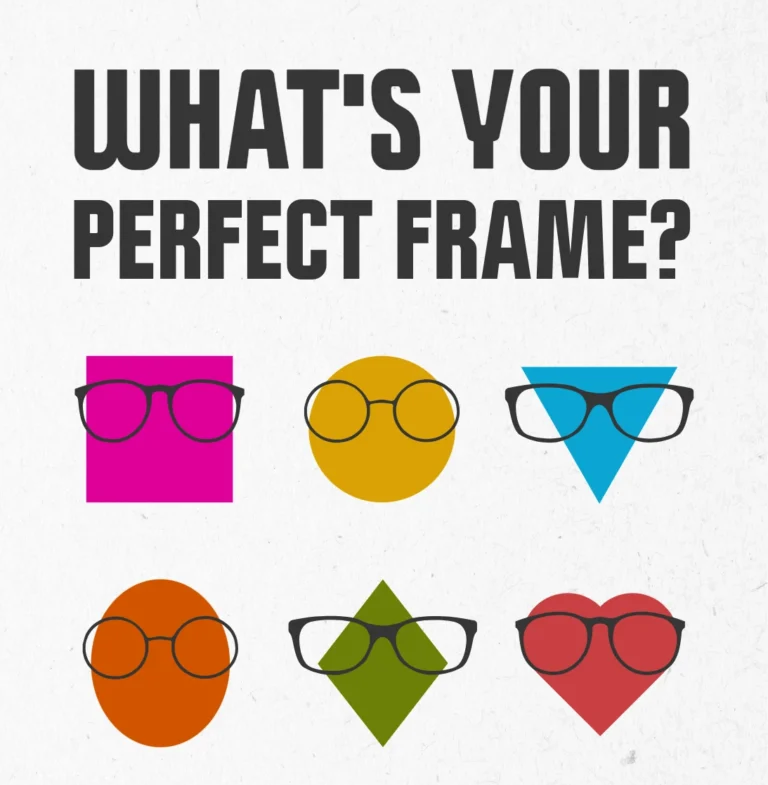
Round Face: Round faces benefit from frames that add definition and length. Rectangular, square, or geometric frames work best here, since the straight edges create contrast against the face’s natural curves. Avoid round or oval frames, as they tend to emphasize roundness rather than balance it.
Square Face: Square faces have strong jawlines and angular features, so round or oval frames help soften that structure. Cat-eye frames also work well, as they draw attention upward and away from the jaw. Avoid boxy or sharply rectangular frames, which echo the face’s existing angles and can make it look more boxy.
Oval Face: Oval is generally considered the most versatile face shape, since proportions are already balanced. Most frame shapes work, including rectangular, square, round, and aviator styles. The main thing to avoid is frames that are oversized relative to face proportions, which can throw off the natural balance.
Heart-Shaped Face: Heart-shaped faces are wider at the forehead and narrower at the chin, so frames that are wider at the bottom help balance proportions. Light-colored or rimless frames also work well, since they avoid adding extra visual weight to the upper face. Avoid heavily decorated or top-heavy frames, which can make the forehead appear even wider.
Long (Oblong) Face: Long faces benefit from frames with more height than width, since this breaks up the vertical length of the face. Decorative or patterned temples can also add width visually. Avoid small, narrow frames, which can make the face appear even longer.
Diamond Face: Diamond faces are widest at the cheekbones, so frames with detailing on the brow line, like cat-eye or oval shapes, help balance the narrower forehead and jaw. Rimless or lightly framed styles also work well. Avoid narrow frames that sit close to the face, as they can emphasize the cheekbone width.
Quick Comparison Table
| Face Shape | Best Frame Styles | Frames to Avoid |
| Round | Rectangular, square, geometric | Round, oval |
| Square | Round, oval, cat-eye | Boxy, sharp rectangular |
| Oval | Most shapes work | Oversized frames |
| Heart | Bottom-heavy, rimless, light-colored | Top-heavy, ornate frames |
| Long | Tall frames, decorative temples | Small, narrow frames |
| Diamond | Cat-eye, oval, rimless | Narrow, close-fitting frames |
Common Myths About Face Shape and Frames
Myth: There’s only one correct frame shape for each face shape: Not really. The contrast principle is a guideline, not a strict rule: personal style, frame size, and color all play a role in what actually looks good.
Myth: Bigger frames suit everyone equally: Frame size should scale with face size. Oversized frames on a smaller face can overwhelm features rather than flatter them.
Myth: Frame color doesn’t matter as much as shape: Color does matter. Lighter or transparent frames tend to suit smaller or more delicate features, while bolder colors can add definition to softer face shapes.
Myth: You can’t change your face shape’s “issues” with glasses: You’re not fixing anything; frames simply create visual balance and contrast, which is a styling choice, not a correction.
Other Factors Beyond Face Shape
- Frame Size and Proportion: Frames should roughly match the width of your face, with the top of the frame aligning close to your eyebrows. Frames that are too small or too large can throw off the contrast effect even if the shape itself is right.
- Bridge Fit: A frame that constantly slides down or pinches at the nose will be uncomfortable regardless of how well it suits your face shape. Bridge fit is often overlooked but matters just as much for daily wear comfort.
- Skin Tone and Frame Color: Warmer skin tones tend to suit gold, tortoiseshell, or warm brown frames, while cooler skin tones often pair well with silver, black, or cool-toned colors. This isn’t a strict rule, but it’s a useful starting point when narrowing down options.
- Lifestyle and Usage: Someone working at a desk all day has different frame priorities than someone who’s active outdoors. Lightweight materials like TR-90 or titanium suit all-day wear, while more rigid acetate frames may suit occasional or fashion-forward use better.
Buying Guide: Step-by-Step
- Identify your face shape: using the mirror-tracing method or by measuring forehead, cheekbone, and jaw width.
- Apply the contrast principle: pick frame shapes that differ from your face’s natural lines.
- Check frame size: against your face width, making sure the frame doesn’t overwhelm or get lost on your features.
- Try a few materials: to see how they sit and feel after several minutes, not just the first glance in a mirror.
- Consider skin tone: when narrowing down frame color options.
- Factor in daily wear time: when choosing between lightweight and more decorative frame materials.
Conclusion
Choosing the right eyeglass frames for your face shape isn’t about following a rigid chart, it’s about understanding the basic principle of contrast and applying it with some common sense around fit, size, and comfort. Round faces lean angular, square faces lean curved, oval faces have the most flexibility, heart-shaped faces balance toward the bottom, and long faces benefit from added height. Once you know your shape and keep fit and proportion in mind, picking frames that actually flatter you becomes a lot less like guesswork.
How do I know my face shape for glasses?
Trace your face outline in a mirror or photo and compare it to common categories like round, square, oval, heart, long, or diamond, based on proportions at the forehead, cheekbones, and jaw.
What frames suit a round face best?
Rectangular, square, or geometric frames work best, since their straight lines contrast with the face’s natural curves.
What frames suit a square face best?
Round, oval, or cat-eye frames help soften a square face’s angular jawline and strong features.
Do oval faces suit all frame shapes?
Mostly, yes. Oval is considered the most versatile face shape, though oversized frames can still throw off natural proportions.
What frames work best for a heart-shaped face?
Frames that are wider at the bottom, along with light-colored or rimless styles, help balance a wider forehead and narrower chin.
This article is for informational purposes only and does not constitute medical advice. Please consult a qualified eye care professional for personalised guidance.
We strive to keep our content accurate and up to date, but information may change over time. Please verify important details with official sources or eye care professionals.