











If your optometrist has mentioned progressive lenses, it’s usually because your eyes need help focusing at more than one distance – most commonly a mix of close-up reading and everyday distance vision, a combination that becomes increasingly common with age. Progressive lenses handle this without the visible line that comes with traditional bifocals, which is part of why they’ve become the more popular option for most people who need multifocal correction.
They’re not without a learning curve, though, and going in with realistic expectations makes a real difference in how smooth that adjustment period feels.
Quick version: progressive lenses provide a gradual, seamless transition between different focal powers – distance vision at the top, intermediate in the middle, close-up reading at the bottom – without a visible dividing line. Most people need one to four weeks to fully adjust. They’re generally a strong option for presbyopia, though not universally ideal for every lifestyle or prescription.
Table of Contents
- How Progressive Lenses Actually Work
- Progressive vs. Bifocal vs. Single Vision
- Who Typically Needs Progressive Lenses
- The Adjustment Period, Honestly
- Benefits of Progressive Lenses
- Drawbacks Worth Knowing About
- Comparison Table
- Choosing the Right Progressive Lenses
- Buying Guide
- Common Mistakes
- FAQs
- Final Verdict
How Progressive Lenses Actually Work
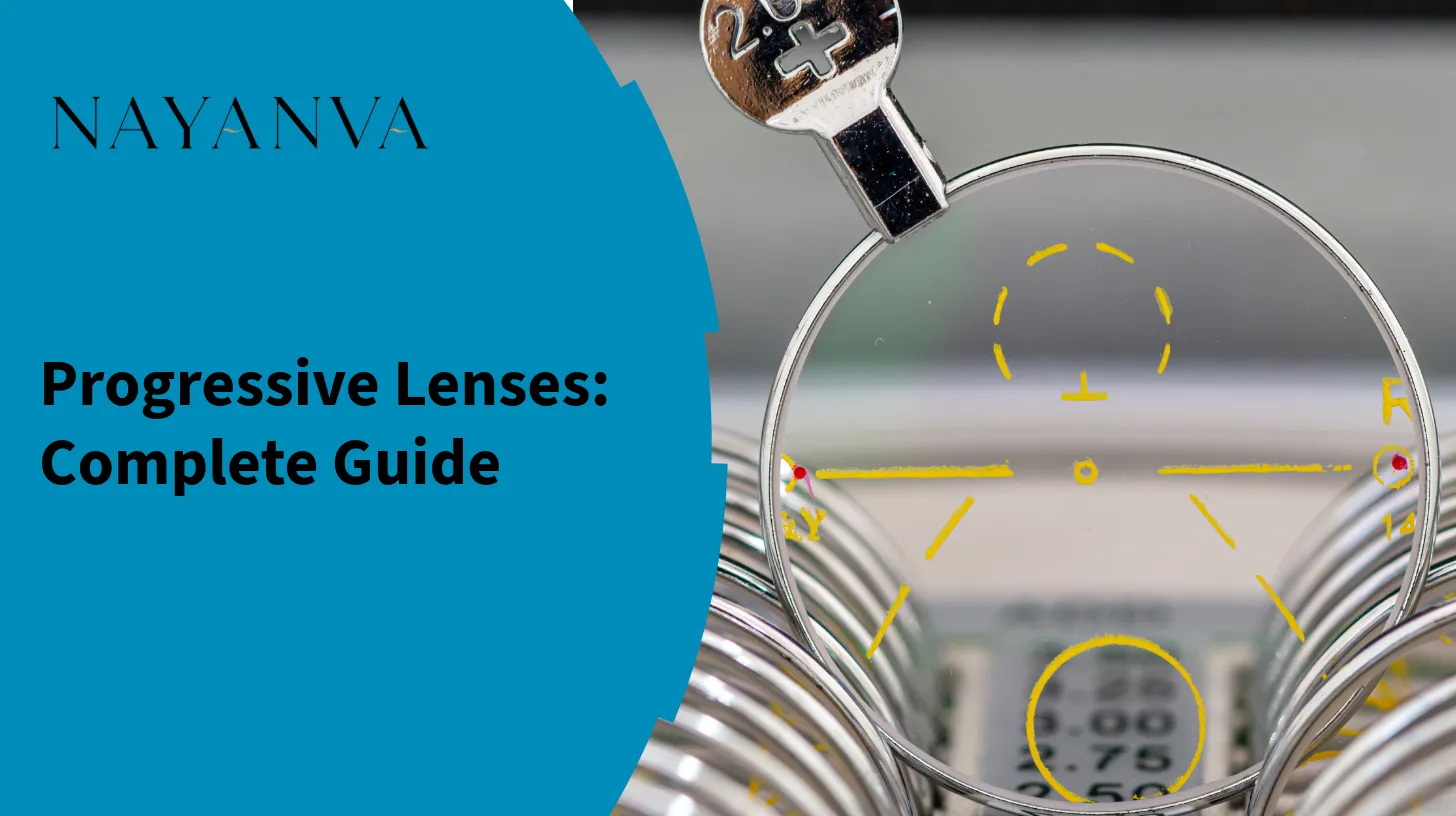
A progressive lens is built with a gradient of focal powers across a single piece of glass or plastic – distance-vision correction at the top of the lens, intermediate correction (arm’s length, like a computer screen) in the middle, and close-up reading correction toward the bottom. Unlike bifocals, there’s no visible line marking the transition between zones; the power changes gradually as your eye moves down the lens, which is why they’re sometimes called “no-line bifocals,” even though the underlying technology is genuinely different from a traditional bifocal.
Progressive vs. Bifocal vs. Single Vision
Single vision lenses correct for one distance only – either near or far, not both. Bifocals correct for two distances with a visible line separating them, typically distance on top and reading at the bottom. Progressives correct for a full range of distances with a smooth, gradual transition and no visible line. The tradeoff is that progressives generally require more precise fitting and a longer adjustment period than bifocals, in exchange for a more natural visual experience and no visible line indicating a multifocal prescription.
Who Typically Needs Progressive Lenses
Progressive lenses are most commonly recommended for presbyopia, the natural, age-related loss of close-up focusing ability that most people experience starting somewhere in their 40s. They’re also used by people who need correction at multiple distances for other reasons, and by anyone who prefers not to have a visible line indicating bifocal or trifocal correction. If you’re already wearing single vision lenses and starting to hold reading material further away to bring it into focus, that’s a common early sign worth mentioning to your optometrist.
The Adjustment Period, Honestly
Most sources are fairly upfront that progressive lenses take some getting used to, and it’s worth taking that seriously rather than assuming your experience will be instant. Common adjustment challenges include some peripheral distortion (a slight blurriness at the edges of the lens, since only a vertical strip through the center of the lens is in sharp focus), needing to move your head rather than just your eyes to find the right focal zone, and mild dizziness or disorientation during the first few days, especially on stairs. Most people adjust within one to four weeks, though this varies by individual, prescription strength, and lens quality. Wearing the glasses consistently during the adjustment period, rather than switching back and forth with an old pair, tends to speed up the process.
Benefits of Progressive Lenses
- No visible line, which many people prefer aesthetically
- Correction across a full range of distances rather than just two fixed zones
- A more natural visual experience once adjusted, since focus shifts gradually rather than jumping between zones
- Only one pair of glasses needed instead of switching between reading and distance glasses
Drawbacks Worth Knowing About
- An adjustment period that some people find uncomfortable or disorienting initially
- Peripheral distortion, which can be more noticeable in lower-quality lenses
- Generally more expensive than single vision or standard bifocal lenses
- Precise fitting matters more than with other lens types, so a poor fitting can affect comfort more noticeably
Comparison Table
| Lens Type | Distances Corrected | Visible Line | Typical Adjustment Period |
|---|---|---|---|
| Single vision | One distance only | No | Minimal to none |
| Bifocal | Two distances | Yes | Short, usually days |
| Progressive | Full range of distances | No | One to four weeks |
| Trifocal | Three distinct distances | Yes | Short to moderate |
Choosing the Right Progressive Lenses
Lens design quality varies meaningfully between budget and premium progressive lenses – higher-end designs generally offer wider clear zones and less peripheral distortion, which can make a real difference in comfort during the adjustment period. Frame shape and size matter too, since progressives need enough vertical height to accommodate the full gradient of focal powers; very small or narrow frames can limit how much usable lens area you actually get. And precise measurements (particularly pupil height, in addition to standard pupillary distance) are more important for progressives than for single vision lenses, so an accurate, professional fitting is worth prioritizing.
Buying Guide
- Get an updated, accurate prescription specifically noting your near, intermediate, and distance correction needs.
- Choose a frame with adequate lens height – very small or narrow frames limit progressive lens performance.
- Consider your budget tier – premium progressive designs generally offer a smoother, less distorted experience.
- Confirm precise fitting measurements are taken in person, since progressives are more fitting-sensitive than single vision lenses.
- Commit to the adjustment period by wearing the glasses consistently rather than switching back to an old pair.
Common Mistakes
Expecting an instant, seamless experience and getting discouraged when the first few days feel awkward. Choosing an overly small or narrow frame that doesn’t provide enough vertical space for the full lens gradient. Going with the cheapest available lens design without understanding that peripheral distortion is often more noticeable in lower-tier options. And giving up on a new pair too early, before allowing the typical one-to-four-week adjustment window to run its course.
FAQs
How do progressive lenses actually work?
They use a gradient of focal powers across the lens – distance correction at the top, intermediate in the middle, close-up reading at the bottom – with a smooth transition and no visible line.
How long does it take to adjust to progressive lenses?
Most people adjust within one to four weeks, though this varies based on individual factors, prescription strength, and lens quality.
Are progressive lenses worth it compared to bifocals?
For many people, yes, particularly if the visible line of a bifocal is a concern – though it’s worth weighing the longer adjustment period and typically higher cost.
What’s the difference between progressive and bifocal lenses?
Bifocals have two distinct correction zones separated by a visible line, while progressives offer a full range of correction with a gradual, line-free transition.
Why do progressive lenses cause peripheral blurriness?
Only a vertical strip through the center of the lens is in sharp focus at any given distance; the sides of the lens are used for transitioning between powers, which can create some blur at the edges.
Can I wear progressive lenses in any frame?
Not ideally – frames need adequate vertical height to accommodate the full lens gradient, so very small or narrow frames can limit performance.
Do progressive lenses work for driving?
Yes, generally, though it’s worth discussing your specific visual needs (including nighttime driving) with your optometrist, since some designs are better optimized for driving than others.
What if I can’t adjust to progressive lenses even after a few weeks?
It’s worth returning to your optometrist to check the fit and prescription, since persistent difficulty can sometimes indicate a fitting issue rather than a normal adjustment challenge.
Are premium progressive lenses actually worth the extra cost?
Often, yes – premium designs generally offer wider clear zones and less peripheral distortion, which can meaningfully improve comfort, especially for first-time wearers.
At what age do most people start needing progressive lenses?
Presbyopia commonly begins affecting close-up focus starting somewhere in the 40s, though the exact timing varies by individual.
Final Verdict
Progressive lenses are a strong option for most people dealing with presbyopia or multi-distance correction needs, offering a more natural visual experience than bifocals without a visible dividing line. The adjustment period is real and worth taking seriously, but most people find it manageable within a few weeks, especially with a well-fitted, reasonably good-quality lens and a frame with enough vertical height to support the design properly.
This article is for informational purposes only and does not constitute medical advice. Please consult a qualified eye care professional for personalised guidance.
We strive to keep our content accurate and up to date, but information may change over time. Please verify important details with official sources or eye care professionals.
