




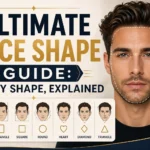





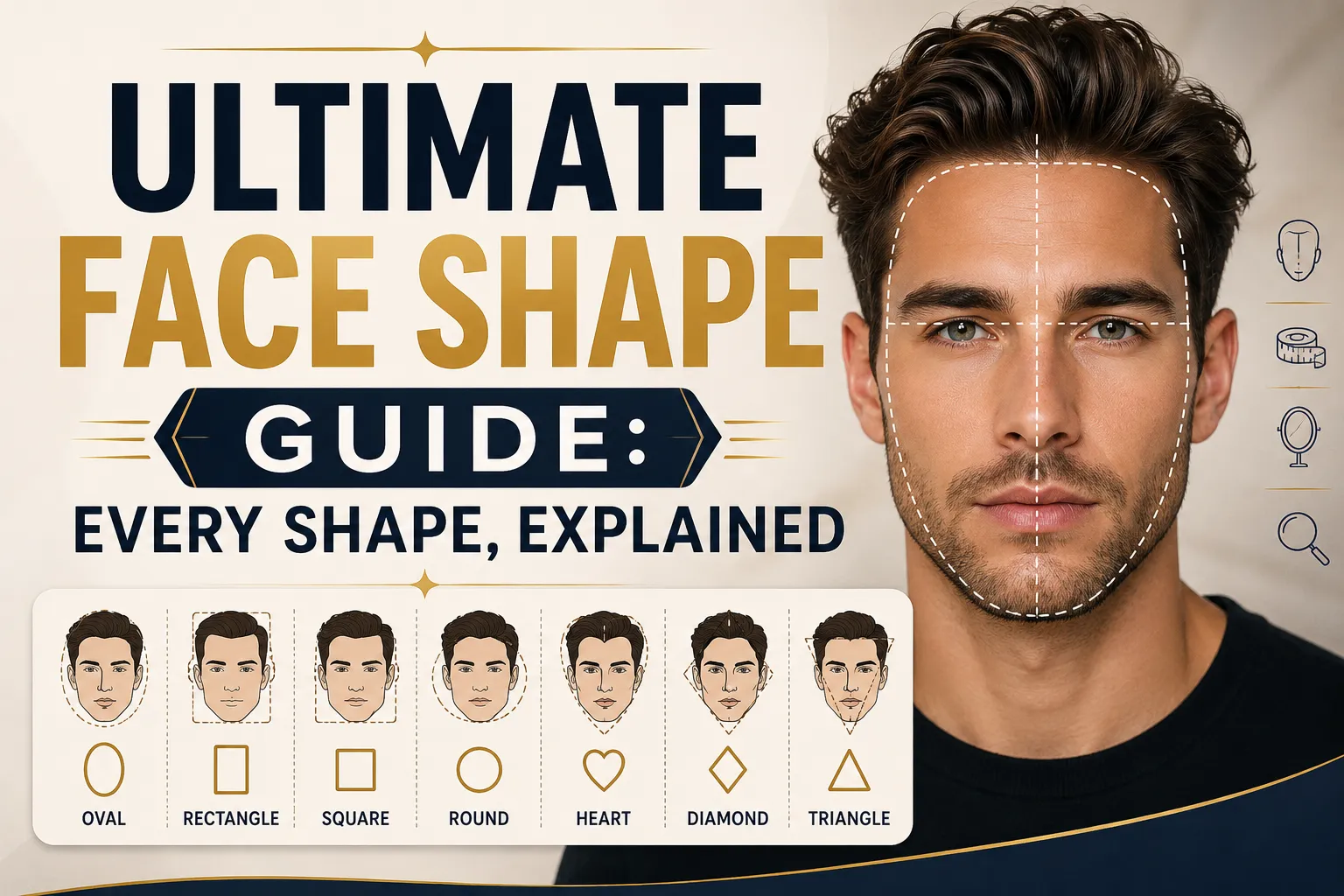

There are eight face shapes that come up consistently across style and eyewear guides – oval, round, square, rectangle, oblong, heart, triangle, and diamond – and most people fall reasonably close to one of them, even if a few sit right on the border between two. This guide covers all eight in one place: what defines each shape, the core logic behind flattering frame choices, and where to go for a deeper dive on any shape specifically.
Think of this as the map before the detailed directions – enough to get oriented, with links to the full guides for whichever shape actually applies to you.
Quick version: every face shape recommendation comes down to one idea – contrast. Frames that add what your face doesn’t have naturally (curve for angular faces, angles for soft faces, width for long faces, lightness for top-heavy proportions) tend to look more balanced than frames that simply repeat your face’s existing shape.
Table of Contents
- The Contrast Principle Behind Every Recommendation
- Oval Face
- Round Face
- Square Face
- Rectangle Face
- Oblong Face
- Heart Face
- Triangle Face
- Diamond Face
- Face Shape Comparison Table
- How to Identify Your Own Shape
- FAQs
- Final Thought
The Contrast Principle Behind Every Recommendation
Before getting into individual shapes, it’s worth understanding the one idea that drives every recommendation in this guide: contrast. A frame that mimics your face’s natural outline tends to blend in and can flatten your features, while a frame that introduces something your face doesn’t already have – a curve, an angle, some added width – tends to create balance and definition. Every shape-specific recommendation below is really just this same principle applied differently depending on what a given face shape has, and doesn’t have, on its own.
Oval Face
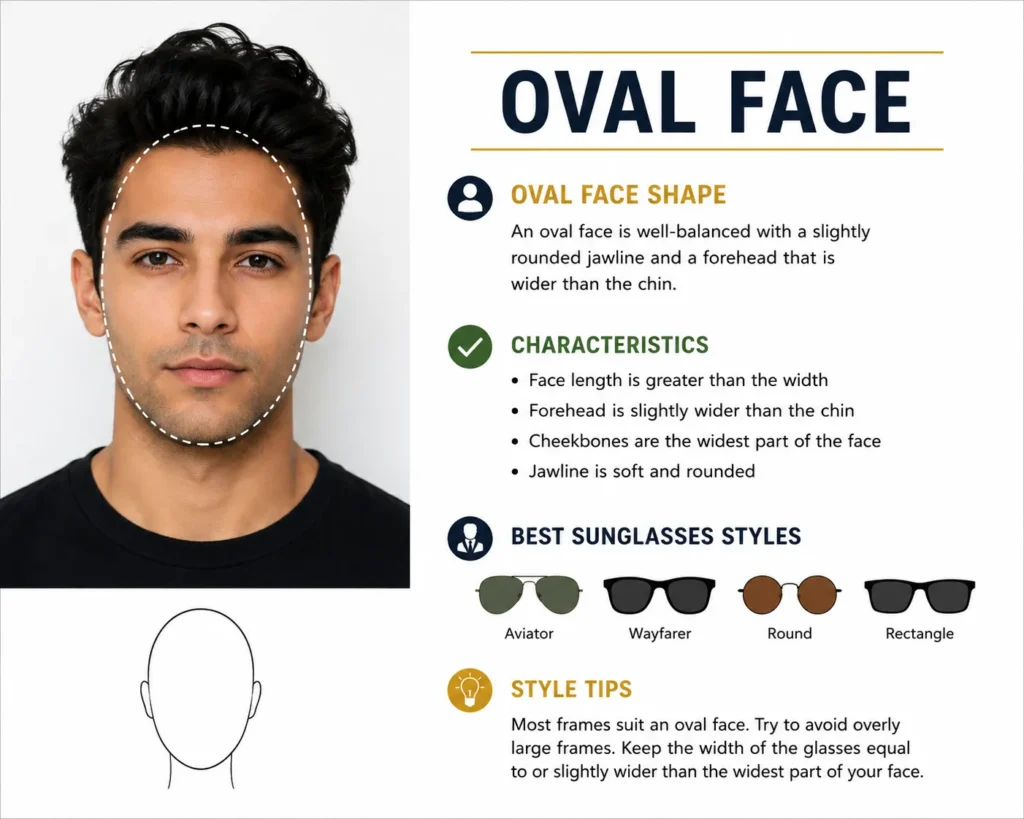
An oval face is longer than it is wide, with a gently curved jaw and a forehead, cheekbone, and jaw width that stay fairly close together. It’s often considered the most versatile shape, since it lacks strong angles in either direction – meaning most frame styles work reasonably well, with rectangular, wayfarer, and geometric shapes adding a bit of helpful structure.
Full guides: Best Glasses for Oval Face Men, Best Glasses for Oval Face Women, Best Sunglasses for Oval Face
Round Face
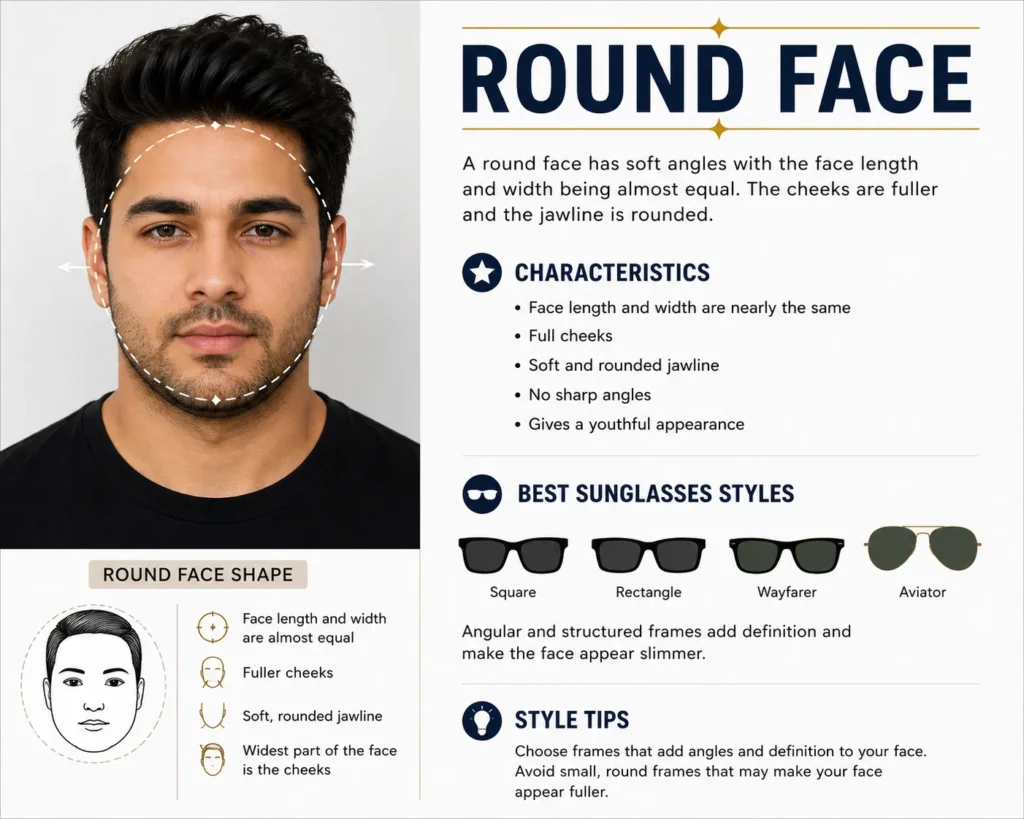
A round face has close-to-equal width and length, full cheeks, and a soft, curved jawline with no sharp angles. Angular frames – rectangular, square, or angular cat-eye – add the contrast this shape benefits from most, while round or small frames tend to emphasize fullness rather than balancing it.
Full guides: Best Glasses for Round Face Men, Best Glasses for Round Face Women, Best Sunglasses for Round Face
Square Face
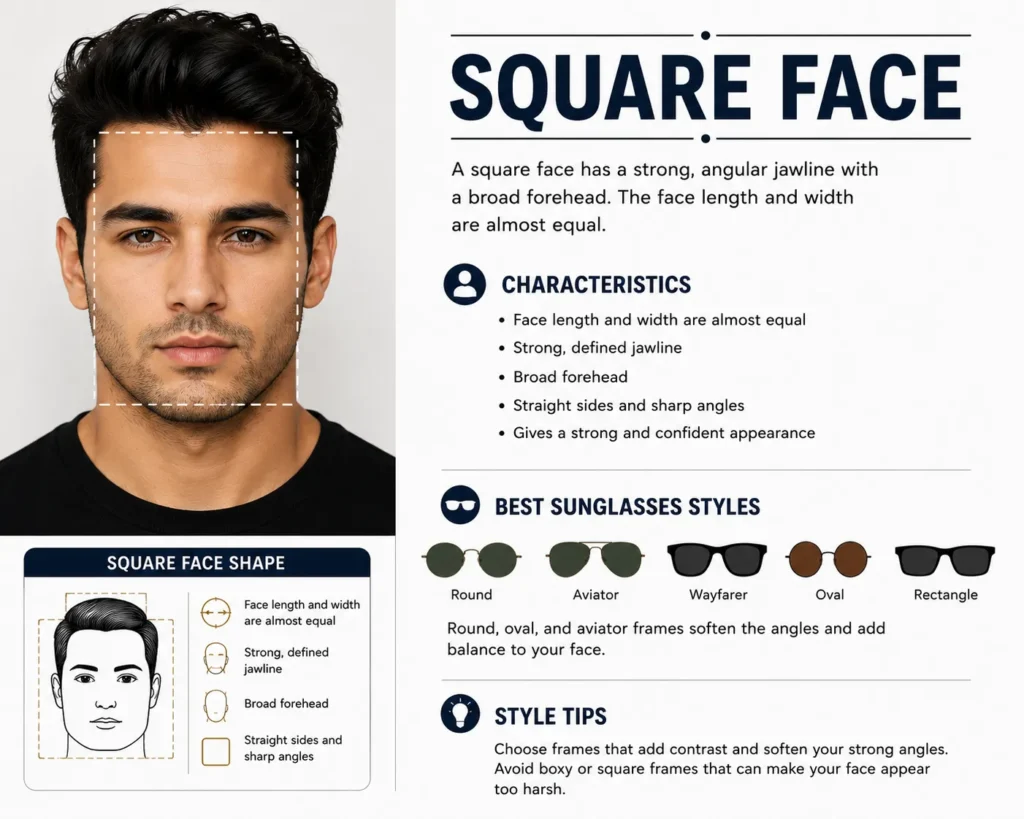
A square face has a strong, angular jaw, a broad forehead, and width-to-length proportions that sit close together. Curved frames – round, oval, or aviator – soften the jaw’s natural angularity, while square or heavily geometric frames tend to amplify it instead.
Full guides: Best Glasses for Square Face Men, Best Glasses for Square Face Women, Best Sunglasses for Square Face
Rectangle Face
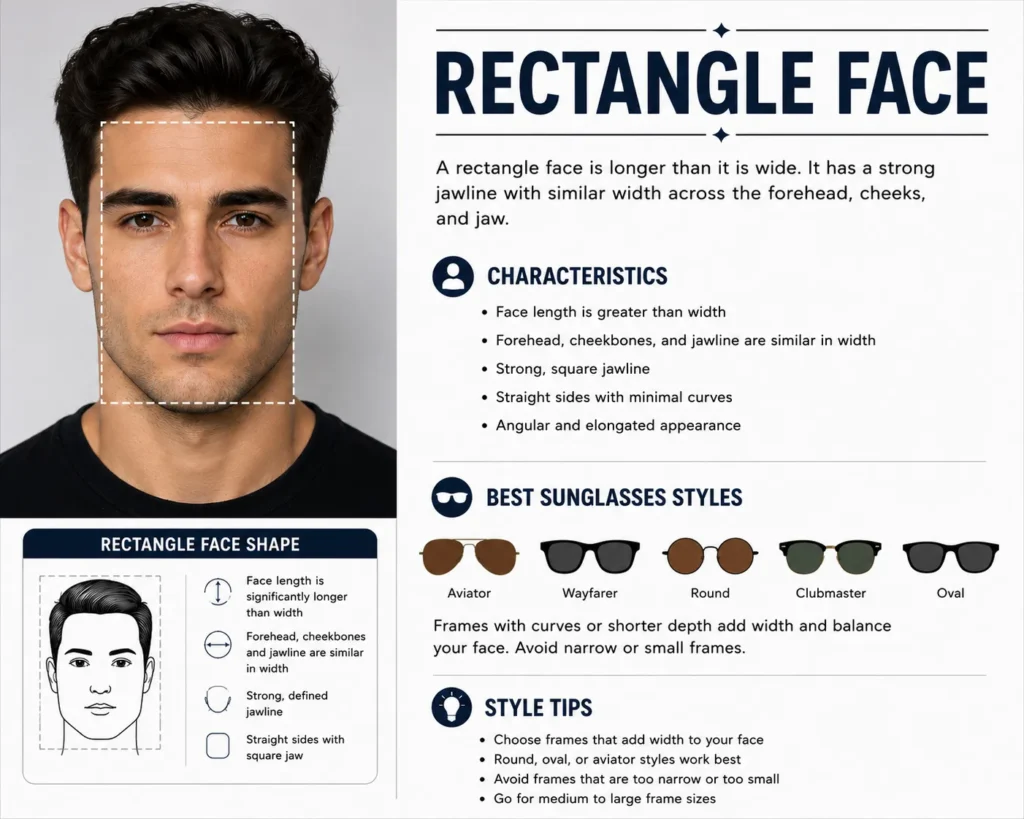
A rectangle face is long with straight sides and a jaw that’s more defined and angular than an oblong face’s softer jawline. Width matters more than angularity here – oversized, bold rectangular, and wayfarer frames add the horizontal emphasis this shape needs, while small or narrow frames stretch the face further.
Full guide: Best Glasses for Rectangle Face
Oblong Face
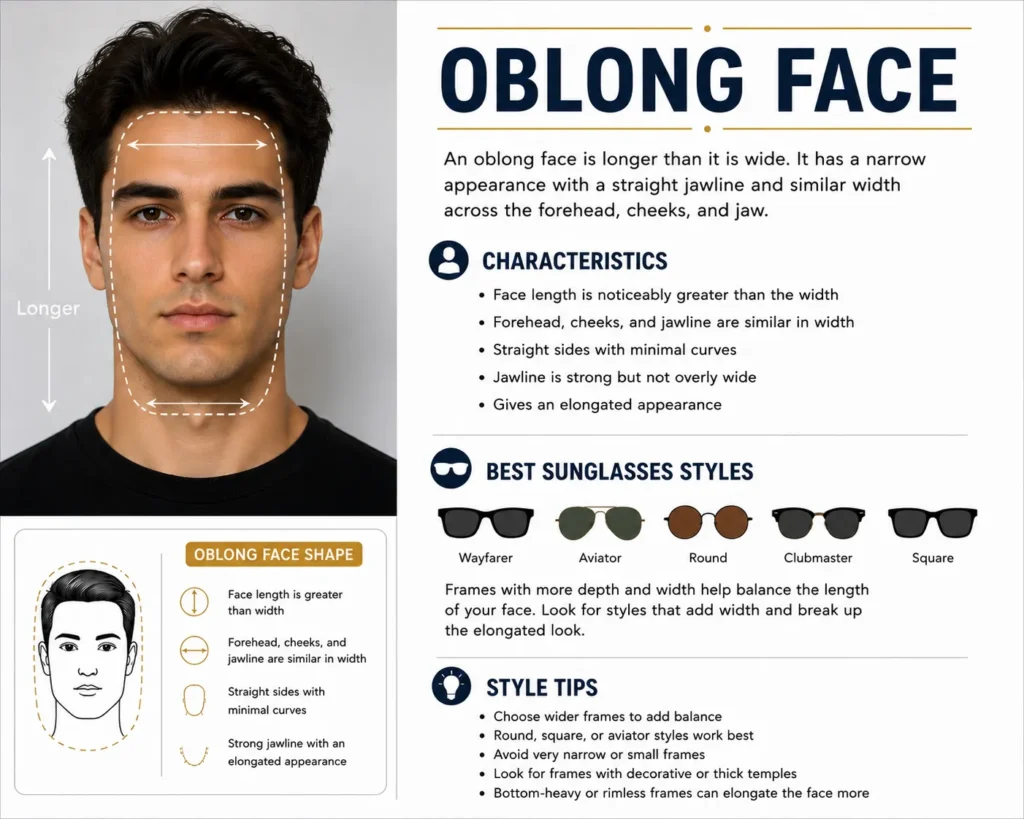
An oblong face shares the length and straight sides of a rectangle face, but with a softer, more rounded jawline. The same width-focused logic applies – oversized and wayfarer shapes help shorten the face visually, while narrow or tall frames add to the existing length.
Full guide: Best Glasses for Oblong Face
Heart Face
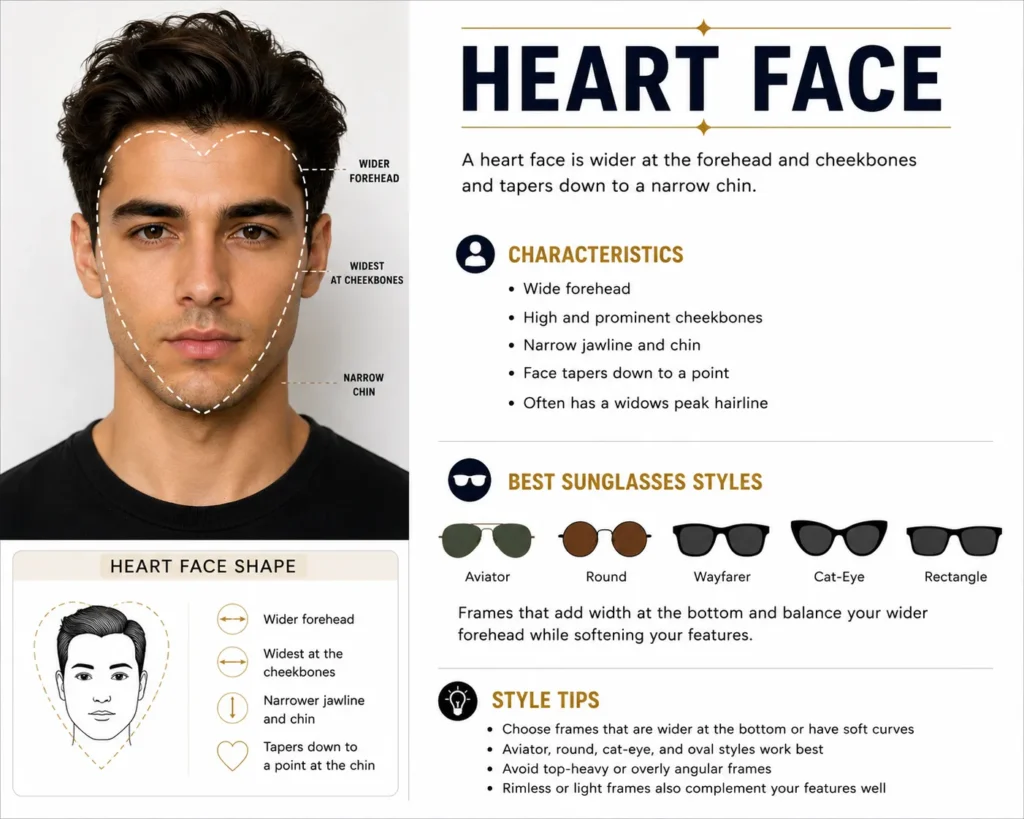
A heart-shaped face is widest at the forehead and cheekbones, narrowing to a smaller, sometimes pointed chin. The goal here is keeping visual weight low – rimless, oval, or subtly curved cat-eye frames avoid adding bulk at an already wide brow, while bold browline frames tend to make the forehead look wider still.
Full guides: Best Glasses for Heart Face, Best Sunglasses for Heart Face
Triangle Face
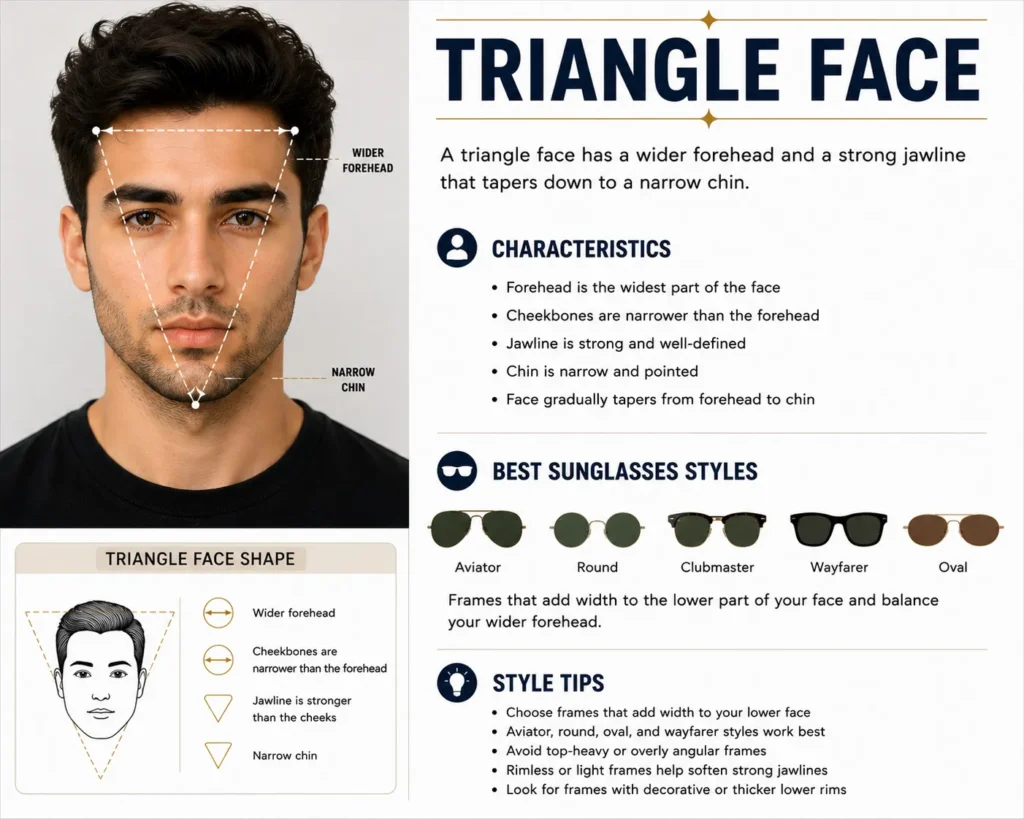
A triangle (or pear-shaped) face is the mirror image of heart-shaped – widest at the jaw, narrowing up toward a smaller forehead. Frames need visual weight up top rather than down at the base, which is where cat-eye and browline shapes come in, adding structure at the brow to balance a wider jaw.
Full guide: Best Glasses for Triangle Face
Diamond Face
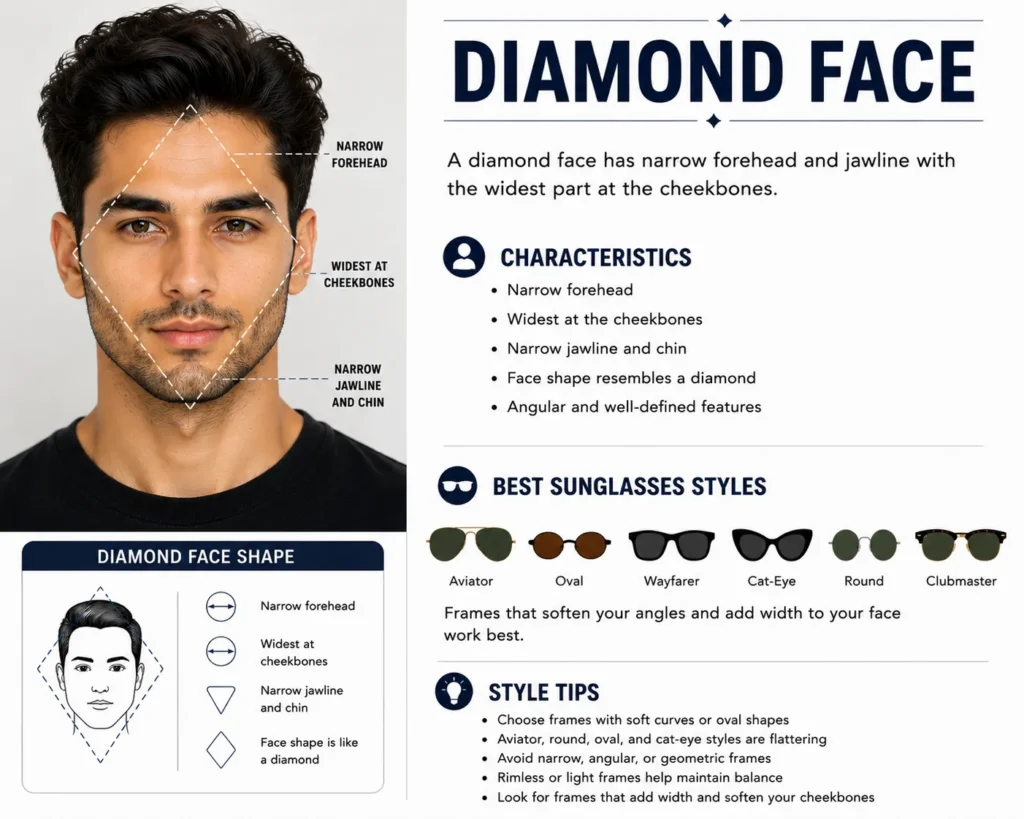
A diamond face is widest at the cheekbones, with both the forehead and jaw narrower by comparison – genuinely one of the rarer face shapes. Cat-eye, oval, and browline frames add detail at the brow to balance a narrower forehead, while narrow or heavily angular frames tend to leave the cheekbones looking even more prominent.
Full guide: Best Glasses for Diamond Face
Face Shape Comparison Table
| Face Shape | Defining Trait | Frames That Work | Frames to Skip |
|---|---|---|---|
| Oval | Balanced proportions, longer than wide | Rectangular, wayfarer, geometric | Very small or narrow frames |
| Round | Equal width/length, soft full cheeks | Rectangular, square, angular cat-eye | Round or small frames |
| Square | Strong angular jaw, broad forehead | Round, oval, aviator | Square, heavily geometric frames |
| Rectangle | Long, straight sides, angular jaw | Oversized, bold rectangular, wayfarer | Small, narrow, or tall frames |
| Oblong | Long, straight sides, soft jaw | Oversized, wayfarer, decorative temples | Small, narrow, or tall frames |
| Heart | Wide forehead, narrow chin | Rimless, oval, subtle cat-eye | Bold browline, heavy top details |
| Triangle | Wide jaw, narrow forehead | Cat-eye, browline, bold-topped frames | Bottom-heavy frames |
| Diamond | Widest at cheekbones | Cat-eye, oval, browline | Narrow, heavily angular frames |
How to Identify Your Own Shape
Measure four things: forehead width, cheekbone width, jaw width, and total face length, using a soft tape measure with your hair pulled back. Compare face length to width first – clearly longer suggests oval, oblong, or rectangle; close to equal suggests round or square. Then compare jaw width to forehead width – a narrower jaw suggests heart-shaped, a wider jaw suggests triangle, and cheekbones clearly exceeding both suggests diamond. Finally, check jaw curvature – a soft curve versus a visible angular corner – to separate similar shapes like oval from rectangle, or round from square. For a full walkthrough, see the dedicated guide on finding your face shape.
FAQs
How many face shapes are there?
Most guides recognize eight standard categories: oval, round, square, rectangle, oblong, heart, triangle, and diamond.
Which face shape is most common?
Oval is frequently cited as one of the more common shapes, though prevalence can vary across different populations and studies.
What’s the difference between oblong and rectangle face shapes?
Both are long with straight sides, but a rectangle face has a more angular, defined jaw, while an oblong face has a softer, more rounded jawline.
What’s the difference between heart and triangle face shapes?
They’re essentially opposites – heart-shaped faces are widest at the forehead and narrow toward the chin, while triangle faces are widest at the jaw and narrow toward the forehead.
Is diamond really a rare face shape?
Yes, relatively speaking – it’s less commonly discussed than oval, round, or square, partly because it occurs less frequently.
Can I have a face shape that doesn’t match any single category cleanly?
Yes, this is common – plenty of faces fall between two categories, and it’s fine to pull frame advice from both relevant guides in that case.
Does face shape change over time?
Aging and weight changes can shift proportions somewhat, so it’s worth re-checking your face shape periodically rather than assuming it’s fixed forever.
Is the “contrast principle” the only factor in choosing glasses?
No – face shape is one factor alongside skin tone, lifestyle, prescription needs, and personal style, all of which matter for a frame you’ll actually enjoy wearing.
Do these face shape categories apply to both men and women equally?
Yes, the underlying shapes and contrast principles are the same regardless of gender – style preferences and specific frame recommendations may differ, which is why shape-specific guides often have separate versions for men and women.
Where should I start if I’m not sure which face shape I have?
Start with the face shape identification guide, take the four core measurements, and then head to the specific shape guide that matches your results.
Final Thought
Every face shape guide on this site, no matter which specific shape it covers, comes back to the same underlying logic: contrast creates balance. Once you know your own proportions – length versus width, jaw versus forehead, and how angular or soft your jawline is – the right frame direction becomes much easier to identify, and the shape-specific guides linked throughout this page can take you the rest of the way.
This article is for informational purposes only and does not constitute medical advice. Please consult a qualified eye care professional for personalised guidance.
We strive to keep our content accurate and up to date, but information may change over time. Please verify important details with official sources or eye care professionals.
