












Quick Answer : To clean eyeglasses properly: rinse lenses under lukewarm water, apply a tiny drop of plain dish soap (no moisturiser), gently rub lenses and frames with clean fingertips, rinse thoroughly, and dry with a clean microfibre cloth. Never use paper towels, tissues, clothing, or household glass cleaners – all of these scratch lenses or degrade coatings over time.
There is a good chance you are cleaning your glasses wrong. Not dramatically wrong – but the habit of using a shirt hem, a tissue, or a breath-and-wipe routine is so universal that it deserves addressing directly. These methods cause micro-scratches that accumulate over months, quietly degrading optical clarity without you noticing what is happening.
Whether you wear single-vision prescription glasses, progressive lenses, or photochromic lenses, the cleaning method matters. Here is what actually works.
The Right Way to Clean Eyeglasses: Step by Step
- Wash your hands thoroughly first. Any oils, lotions, or particles on your hands transfer directly to the lens surface. This step is consistently skipped and consistently matters.
- Rinse lenses and frames under lukewarm running water. This removes dust and grit particles that would scratch the lens during wiping. Hot water can damage lens coatings – keep it cool or lukewarm.
- Apply one small drop of plain dish soap to each lens. Choose an unfragranced soap with no moisturiser, lotion, or antibacterial additives – these leave residue or degrade coatings. A basic dish soap with no extras is the right choice.
- Use clean fingertips to gently rub soap across each lens surface (including edges) and across the frame, nose pads, and temple tips. Nose pad areas and temple tips collect the most oils and skin debris.
- Rinse thoroughly under running water until no soap trace remains. Soap residue left on lenses creates smearing and a persistent hazy film.
- Shake the glasses gently to shed excess water.
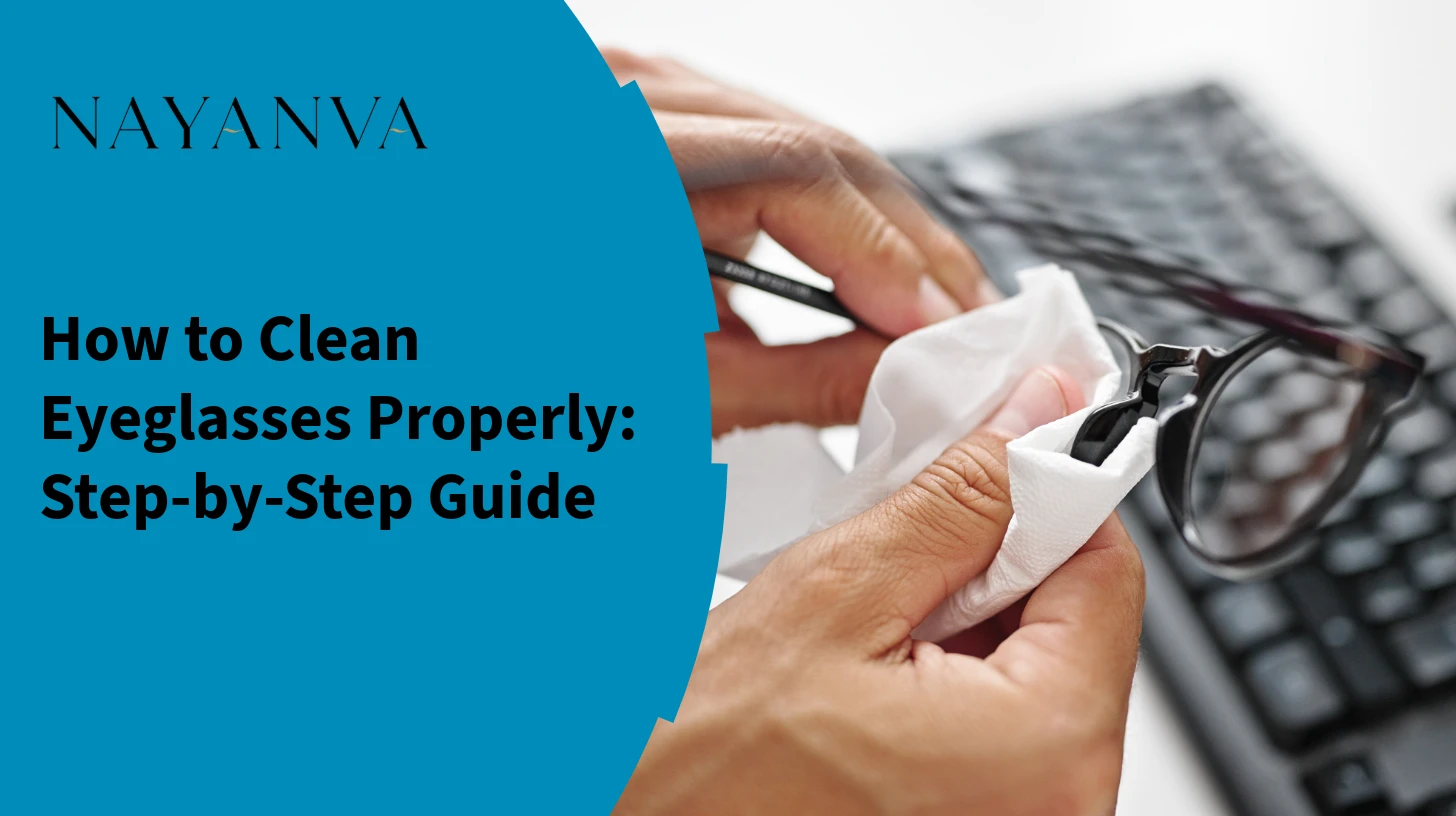
- Dry and polish with a clean, dry microfibre cloth using gentle circular motions. The operative word is clean – a microfibre cloth that has been in a bag or pocket all day picks up oils and particles it will now deposit on your lens.
Expert Tip
Wash your microfibre cloths regularly – at least once a week with daily use. Machine wash on a gentle cycle with no fabric softener (softener coats the fibres and reduces their effectiveness). Air dry only.
What Not to Use When Cleaning Glasses
| What to Avoid | Why It Causes Damage |
| Paper towels / tissues | Contain wood fibres that cause micro-scratches, especially on AR-coated lenses |
| Clothing (shirt, jacket hem) | Rough fibres, plus whatever oils and particles are already on the fabric |
| Household glass cleaner (Windex etc.) | Contains ammonia and solvents that break down lens coatings |
| All-purpose household sprays | Too harsh for optical lens coatings and for acetate frame material |
| Saliva | Contains bacteria, enzymes, and oils – not appropriate for optical surfaces |
| Hot water | Can warp frames (acetate especially) and degrade anti-reflective coatings |
| Acetone or alcohol-based cleaners | Dissolves acetate frames and degrades coating layers |
| Dry rubbing without rinsing first | Even with microfibre – always rinse grit off before wiping |
When to Use Lens Cleaning Spray
Eyeglass cleaning sprays from reputable optical brands are a safe, convenient option for on-the-go cleaning – particularly when running water is unavailable. A good optical spray is pH-neutral and free from alcohol, ammonia, and solvents.
How to use it correctly:
- Spray lightly on both sides of each lens
- Use only a clean, dry microfibre cloth to wipe immediately
- Do not spray and let it sit before wiping
Avoid generic lens wipes sold in bulk at supermarkets unless they specifically state they are safe for coated lenses. Many pre-moistened wipes contain isopropyl alcohol, which degrades anti-reflective and scratch-resistant coatings over time.
Cleaning Different Frame Materials
| Frame Material | What to Know When Cleaning |
| Acetate | Avoid alcohol and acetone – both dissolve or cloud acetate. Soap and water only. |
| Titanium / Metal | Very resilient. Soap and water or optical spray work well. Check screws periodically. |
| TR-90 / Nylon | Highly resistant to most cleaning agents. Soap and water is still safest. |
| Wood / Bamboo frames | Keep water exposure brief. Pat dry immediately. Avoid spray cleaning. |
| Tortoiseshell pattern | It is acetate with patterning – same rules apply. Alcohol will cloud the colour layer. |
How Often Should You Clean Your Glasses?
This depends on how much you wear them and your environment:
- Daily wear glasses: A proper wash with soap and water every 1-2 days is ideal.
- Reading or occasional glasses: A thorough clean once a week, with spot cleaning as needed.
- Sports or outdoor glasses: Clean after every session – sweat accelerates coating degradation.
Between washes, a quick buff with a clean microfibre cloth handles fresh smudges. The mistake is relying on the dry cloth alone for all cleaning – this works for surface smudges but won’t remove the oil layer that builds up with daily handling.
For guidance on when glasses need replacing rather than just cleaning, the article on How Often Should You Change Glasses? offers a clear framework.
Expert Tip
Store your glasses in a hard case when not in use. This protects from accidental surface contact and from the dust accumulation that happens with open-left glasses – dust you later inadvertently wipe into the lens.
Anti-Reflective Coatings: Extra Care Required
If your lenses have an anti-reflective (AR) coating – and most modern prescription lenses do – they require additional care:
- AR coatings improve clarity and reduce screen glare but are more sensitive to harsh cleaners
- Never use dry wipes or rough fabrics on AR-coated lenses
- Always wet the lens before wiping, even with a microfibre cloth – any grit on a dry AR surface scratches it
- AR coatings do wear over time – typically 2-3 years of regular cleaning. If lenses look permanently hazy despite correct cleaning, the coating may be failing and replacement is worth considering
Can I use isopropyl alcohol to clean my glasses?
Not recommended for regular use. While a diluted solution (below 30%) is sometimes used for quick sanitising, consistent alcohol use degrades anti-reflective and scratch-resistant coatings. Soap and water is safer and equally effective.
Is it bad to clean glasses with a shirt?
Yes, consistently bad practice. Cotton and polyester contain fibres that cause micro-scratches, and clothing picks up oils and debris throughout the day. Over months, this visibly degrades optical clarity. Use a clean microfibre cloth after properly washing lenses.
Why do my glasses always look smeared after cleaning?
Most smearing after cleaning comes from soap residue not fully rinsed away, or from using a dirty microfibre cloth that deposits oils back onto the lens. Rinse more thoroughly and wash your cloth regularly.
Can I clean my glasses with water alone?
For light dust, yes – a rinse and dry with a clean microfibre cloth handles it. For oily fingerprints or nose pad deposits, soap is needed. Water alone spreads oils rather than removing them.
How do I clean the nose pads on my glasses?
Nose pads accumulate skin oil, makeup, and debris and should be cleaned with soap and a soft toothbrush or cotton bud. If silicone nose pads have yellowed noticeably, they may need replacing – most opticians can swap these for a minimal cost.
Key Takeaways
- Rinse first, clean with a single drop of plain dish soap, rinse again, dry with a clean microfibre cloth – the safest and most effective method.
- Never use tissues, clothing, household glass cleaners, or alcohol-based products on coated lenses.
- Wash microfibre cloths at least weekly to prevent them transferring oils back onto your lenses.
- AR-coated lenses need wet cleaning before wiping – never dry-wipe without rinsing grit off first.
- Store glasses in a hard case to minimise dust accumulation and accidental scratches.
- Persistent haziness despite correct cleaning usually indicates coating wear – consider lens replacement.
This article is for informational purposes only and does not constitute medical advice. Please consult a qualified eye care professional for personalised guidance.
We strive to keep our content accurate and up to date, but information may change over time. Please verify important details with official sources or eye care professionals.



[…] 16, 2026 Eyeglass Frame Materials Explained: Acetate, Titanium, TR-90 & More | Nayanva June 16, 2026 How to Clean Eyeglasses Properly: Step-by-Step Guide | Nayanva June 16, […]