







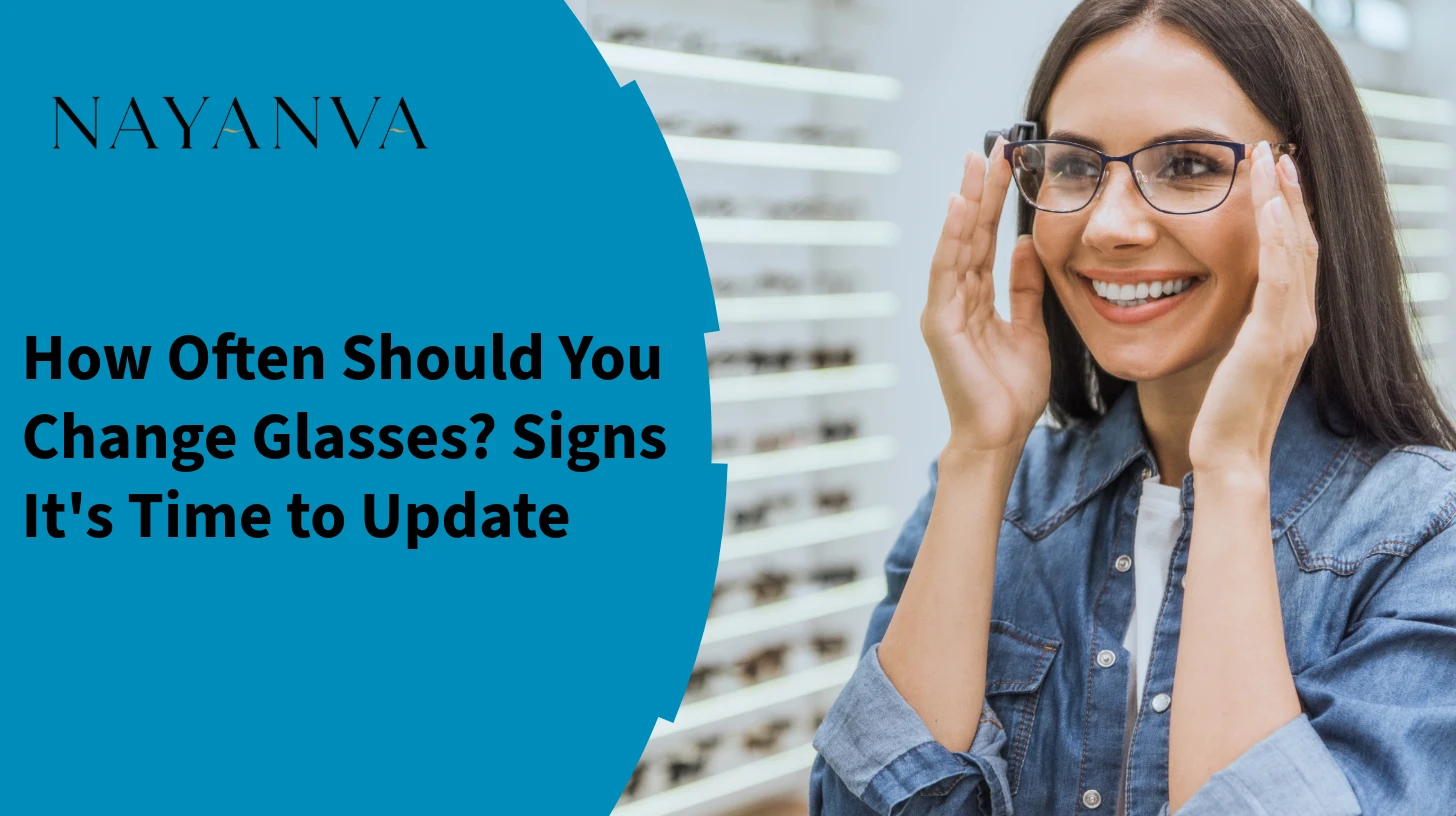

Quick Answer : Most opticians recommend an eye examination every one to two years, and glasses should be updated whenever your prescription changes meaningfully. Quality frames last 2-5 years with proper care; lenses may need replacing sooner if scratched or coating-degraded. Children and young adults typically need more frequent updates than adults with stable prescriptions.
There is no universal answer to how long a pair of glasses should last – it depends on your prescription stability, how you care for them, your lifestyle, and the quality of frames and lenses you started with. What exists, though, are clear signals that tell you it is time for a change.
Most people keep glasses until they break or until something forces a visit to the optician. A more proactive approach – understanding the timelines and warning signs – saves both money and visual quality over time.
The Starting Point: Eye Examination Frequency
Frame and lens replacement follows from your eye examination, not the other way around. Most optometrists recommend:
- Every 2 years for adults with stable prescriptions and no active eye health concerns
- Every year for adults over 60, people with diabetes, glaucoma, or significantly strong prescriptions
- Every year for children and teenagers, whose prescriptions can change meaningfully between examinations
- Every year for contact lens wearers (contact prescriptions require separate fitting assessments)
These examinations check not just your prescription but eye health more broadly – signs of glaucoma, macular degeneration, cataracts, diabetic retinopathy, and other conditions that benefit enormously from early detection.
Expert Tip
An eye examination is not just a reading test. Optometrists can detect systemic health conditions including hypertension, diabetes, and some neurological conditions through retinal examination. This is one strong reason to maintain a regular examination schedule regardless of how clear your vision currently seems.
How Long Do Prescription Lenses Last?
This depends on the prescription, care habits, and lens quality:
- Prescription stability: If your prescription has not changed at your most recent examination, your current lenses remain optically correct. There is no arbitrary optical expiry on lenses that are still accurate.
- Physical condition: Scratches and coating degradation reduce clarity and can cause eye fatigue even when the prescription is correct.
- Anti-reflective coating: AR coatings typically last 2-3 years before they begin to appear cloudy or show interference patterns that cleaning cannot remove.
- High-index lenses: More susceptible to visible wear at edges over time with strong prescriptions.
How Long Do Frames Last?
Quality frames – acetate or titanium from reputable sources – routinely last 3-5 years or more with good care. Practical limiting factors:
- Physical wear: Loose screws, warped temples, fatigued spring hinges, worn nose pads – these are maintenance issues, not replacement triggers. Most are fixable at an optician.
- Acetate deterioration: In sustained neglect (heat exposure, harsh cleaners), acetate can dry and crack over several years.
- Fit changes: Faces change subtly over years; frames that fitted perfectly at 35 may sit differently at 45.
- Style evolution: Not a functional reason, but a genuine one for many wearers.
Proper cleaning and storage extends frame life significantly. The guide on How to Clean Eyeglasses Properly covers the specific habits that protect both frames and lenses.
Signs Your Glasses Need Changing
| Sign | What It Means | Urgency |
| Blurry vision despite clean lenses | Prescription has likely changed | Book eye examination soon |
| Headaches after extended wear | Prescription mismatch or frame fit issue | Book eye examination |
| Squinting to see clearly | Prescription may be insufficient | Book eye examination soon |
| Eye fatigue and strain | Prescription or screen habits; possibly outdated progressives | Consult optician |
| Visible scratches on lenses | Reduced optical clarity and increased glare | Replace lenses |
| Cloudy or hazy lenses despite cleaning | AR coating degradation | Replace lenses |
| Frames sitting crooked / loose screws | Adjustment needed, not replacement | Optician adjustment visit |
| Broken or cracked frame | Frame replacement needed | Immediate |
| Children squinting or reporting headaches | Common sign of prescription change in children | Book eye examination promptly |
Children and Teenagers: Different Rules Apply
Children’s prescriptions can change significantly from year to year, particularly during growth phases. Wearing an outdated prescription can affect academic performance, posture (from squinting at boards), and – for younger children – the visual development that continues into early adolescence.
Annual eye examinations for children from age 3-4 onward are the clear standard recommendation. When a prescription change is confirmed, update glasses promptly rather than waiting for a convenient occasion. Several countries provide funded or subsidised eye examinations for children – worth checking what is available in your area.
When Your Prescription Is Stable
For adults with stable prescriptions – particularly those whose prescription has remained consistent across multiple examinations – the case for replacement is driven by physical frame and lens condition rather than optical necessity. Many adults over 60 with stable prescriptions keep the same prescription for a decade or more.
In this situation:
- Continue regular eye examinations for health monitoring, not just prescription checking
- Replace lenses when physical degradation noticeably affects visual clarity
- Consider frame updates when fit has changed or frames are physically worn
Expert Tip
If you are getting a new prescription but love your current frames, ask whether lenses can be replaced in the existing frames. Many opticians offer lens-only replacement, which can be significantly more cost-effective than buying a complete new pair when the frames remain in good condition.
Can I keep my glasses for 5 years?
If your prescription has been confirmed stable and the frames and lenses are in good physical condition, there is no hard rule against keeping glasses for 5 years. The essential condition is continuing regular eye examinations to verify prescription accuracy and monitor eye health.
Do glasses prescriptions expire?
Prescriptions do not expire medically if your eyes have not changed. However, many countries have legal requirements for prescription validity periods (typically 1-2 years for adults, 1 year for children) before a fresh examination is required to dispense new lenses.
How do I know if my prescription has changed?
The clearest signs are: vision that seems less sharp, increased squinting, headaches after sustained visual tasks, or difficulty reading text you previously read comfortably. An eye examination confirms the change.
Is it harmful to wear the wrong prescription?
Wearing a significantly incorrect prescription can cause eye strain, headaches, and visual discomfort. It will not permanently damage your eyes in most cases, but it meaningfully reduces visual quality and daily comfort.
When should children first get glasses?
Children should have their first eye examination in infancy (screened for conditions like amblyopia and strabismus) and again before starting school. If glasses are prescribed, they should be worn as instructed consistently. Regular annual examinations from school age onward are recommended.
Key Takeaways
- Adults with stable prescriptions should have eye examinations every 1-2 years; children and high-risk adults annually.
- Lenses should be replaced when the prescription changes meaningfully or when physical degradation affects clarity.
- Quality frames last 2-5 years with proper care; loose screws and minor damage are fixable without full replacement.
- Children’s prescriptions can change rapidly – annual examinations and prompt updates are important.
- Prescription expiry dates are regulatory requirements, not medical ones – but regular examinations remain essential for eye health.
- If you love your frames, ask about lens-only replacement when updating your prescription.
This article is for informational purposes only and does not constitute medical advice. Please consult a qualified eye care professional for personalised guidance.
We strive to keep our content accurate and up to date, but information may change over time. Please verify important details with official sources or eye care professionals.


[…] Best Eyeglasses for Office Work: Lenses, Features & Frame Guide | Nayanva June 17, 2026 How Often Should You Change Glasses? Signs It’s Time to Update | Nayanva June 17, 2026 What Are Progressive Lenses? Complete Guide for First-Time Wearers | Nayanva […]