













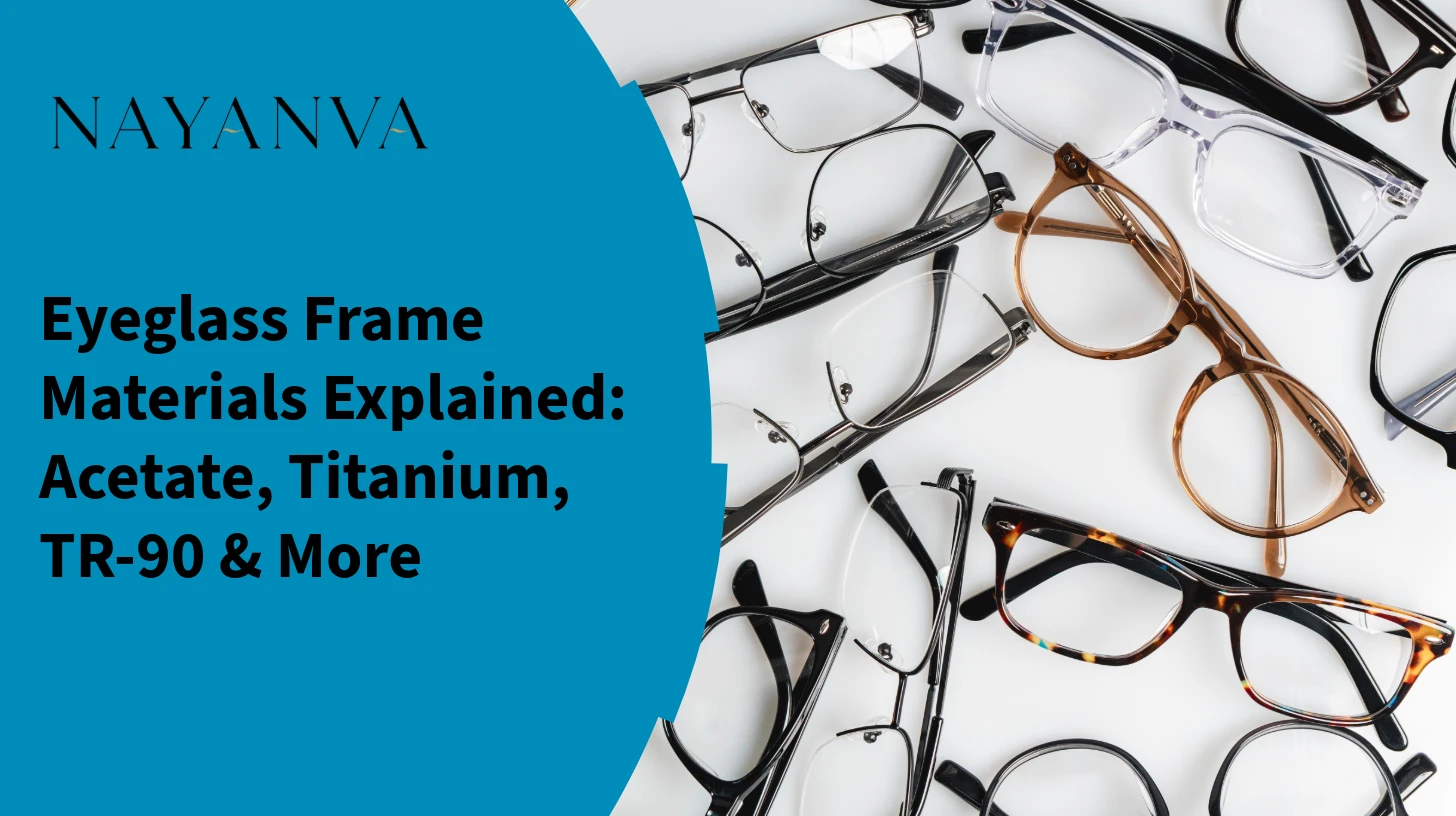

Quick Answer : The main eyeglass frame materials are acetate (plant-based plastic), titanium, stainless steel, TR-90 nylon, and beta titanium. Acetate offers the most colour and style range; titanium is the most durable and lightest metal option; TR-90 is the most flexible and lightweight overall; stainless steel is the most accessible metal choice. The right material depends on your balance of weight, durability, aesthetics, and budget.
When you pick up a pair of glasses and they feel instantly right – the weight, the texture, the way they sit on your nose – that experience is largely shaped by frame material. It is one of those background decisions that few buyers consciously make, yet it affects daily comfort, longevity, and how well the frames survive your particular lifestyle.
Here is a clear-eyed look at every major frame material, what each genuinely offers, and who each suits best.
Acetate
Acetate is the material behind nearly every colourful, thick-framed, fashion-forward pair of glasses you see. It is a plant-derived plastic – cellulose acetate, made from cotton fibres and wood pulp – and it occupies a different visual and tactile world from metals.
What Makes Acetate Special
- Colour depth and variety: Acetate can be mixed with pigments throughout the material, creating the rich tortoiseshells, translucent layers, and multi-colour patterns you simply cannot achieve with metal.
- Adjustability: An optician can gently heat acetate to reshape and fine-tune the fit – useful for bespoke fitting.
- Feel: Heavier than metal or TR-90, but the weight feels substantial rather than cheap. Many wearers strongly prefer it.
- Scratch resistance: Better than most plastics, though less resilient than titanium.
Limitations
- Sensitive to sustained heat – avoid leaving on car dashboards in summer
- Heavier than metal or flexible plastic alternatives
- Can dry out or become more brittle over many years without care
Acetate is the natural choice for anyone who treats eyewear as a genuine style accessory. The colour and pattern possibilities are unmatched by any other material. If you are debating between acetate and titanium, the dedicated guide on Titanium vs Acetate Frames: Which One Should You Choose? gives a complete side-by-side breakdown.
Titanium
Titanium is the premium choice in metal eyeglass frames. It is one of the most remarkable structural materials used in consumer products – combining extreme lightness with exceptional strength and corrosion resistance.
What Titanium Offers
- Exceptionally lightweight – titanium frames can weigh as little as 7-9 grams total
- Corrosion-resistant – no rusting, tarnishing, or degrading from skin oils or sweat
- Hypoallergenic – ideal for anyone with metal sensitivities or nickel allergies
- Biocompatible – the same material used in medical implants
- Natural flex – pure titanium and beta titanium both have inherent spring-like quality
Beta Titanium
Beta titanium is a titanium alloy that adds extra flexibility to the base metal’s properties. Beta titanium temple arms can be bent significantly without snapping – a genuine practical advantage for active wearers or anyone who tends to be rough with their glasses.
Limitations
- Higher cost – significantly more expensive than steel or acetate
- Limited aesthetic range – mostly thin, minimal designs rather than bold fashion statements
- Requires specialist adjustment – cannot be heat-shaped like acetate
Expert Tip
If you experience skin reactions to metal frames – redness, itching, or irritation at temples or nose pads – the culprit is almost always nickel in stainless steel or alloy frames. Switching to pure titanium almost always resolves this completely.
TR-90 (Thermoplastic Nylon)
TR-90 is where engineering priorities take precedence over aesthetics. This thermoplastic nylon is used in sports eyewear, children’s glasses, and any context where flexibility and light weight are the primary requirements.
- Extremely lightweight – often lighter than titanium for equivalent frame sizes
- Highly flexible – can be twisted and bent without permanent deformation
- Impact-resistant – a key reason for its use in sports and children’s eyewear
- Hypoallergenic – no metal components to trigger sensitivities
- Temperature stable – does not warp in heat like standard plastic
The trade-off is aesthetic. TR-90 frames tend toward sporty or functional designs rather than fashion-forward silhouettes. Colour variety is more limited than acetate, and the material lacks the visual richness of a layered tortoiseshell. For active lifestyles, children’s eyewear, or anyone prioritising comfort and durability above all else, TR-90 is genuinely excellent.
Stainless Steel
Stainless steel is the workmanlike hero of eyeglass materials – affordable, reasonably durable, available in countless designs, and used in a vast proportion of mid-range eyewear globally.
- More affordable than titanium while retaining good durability
- Can be plated in various finishes – gold, silver, rose gold, matte black
- Easy to adjust – opticians can bend and reshape without specialist tools
- Lighter than acetate, heavier than titanium
The main limitation is nickel content. Most stainless steel alloys contain nickel, which is a common contact allergen. People with metal sensitivities should test before committing or choose titanium instead.
Memory Metal (Flexon and Similar Alloys)
Memory metal alloys – including the Flexon brand and various titanium-nickel alloys – are designed for one purpose: the ability to flex under pressure and return to their original shape. If you sit on your glasses, throw them in a bag, or live an energetic life, memory metal frames are built for you.
- Can be bent significantly without permanent deformation
- Very lightweight, comparable to titanium
- Slightly higher cost than standard steel, less than pure titanium
- Note: Some Flexon alloys contain nickel – check for hypoallergenic labelling if you have sensitivities
Natural Materials: Wood, Horn, and Bamboo
A dedicated segment of the eyewear market produces frames from natural materials – wood, buffalo horn, bamboo, and occasionally bone. These are statement pieces, often handcrafted, with prices that reflect the craft. They offer an aesthetic and tactile experience no synthetic material matches.
- Each pair is genuinely unique – wood grain, horn patterning, and colour all vary
- Heavier than most alternatives and require careful maintenance (avoid prolonged water exposure)
- Not adjustable through standard heating – specialist care required
- Best suited to those seeking artisan or craft-oriented eyewear
Frame Material Comparison
| Material | Weight | Durability | Hypoallergenic | Style Range | Cost |
| Acetate | Medium | Good | Yes | Very wide | – |
| Titanium | Very light | Excellent | Yes | Minimal–modern | – |
| Beta Titanium | Very light | Excellent + flex | Yes | Minimal–modern | – |
| TR-90 Nylon | Lightest | Excellent | Yes | Sporty/functional | – |
| Stainless Steel | Light-medium | Good | Usually no | Wide | – |
| Memory Metal | Very light | Excellent flex | Check label | Moderate | – |
| Wood/Bamboo | Medium-heavy | Moderate | Yes | Artisan/niche | – |
Which frame material is the most durable?
Titanium and beta titanium offer the best combination of lightweight durability for everyday use. TR-90 nylon is the most impact-resistant for sports or high-activity contexts. For long-term durability across years of regular wear, titanium is the consistent leader.
What is the lightest eyeglass frame material?
TR-90 nylon is typically the lightest, followed closely by titanium. Both are significantly lighter than acetate or stainless steel. If weight is your primary concern – particularly relevant for progressive lens wearers with heavier lenses – these are the materials to focus on.
Are acetate frames better than metal frames?
Neither is categorically better – they serve different needs. Acetate offers unmatched style variety for fashion-conscious wearers. Metal, particularly titanium, is better for lightweight comfort, hypoallergenic requirements, and durability in thin-frame designs.
Can I be allergic to eyeglass frames?
Yes – nickel allergy is one of the most common contact allergies, and most stainless steel and many alloy frames contain nickel. Symptoms include redness and itching at nose bridge, temples, and ears. Switch to pure titanium or plastic (acetate or TR-90) frames to resolve this.
How long do acetate frames last?
With proper care, acetate frames typically last 3-5 years or more. Avoiding heat exposure, cleaning with soap and water rather than solvents, and storing in a hard case extends their lifespan significantly. The cleaning guide on How to Clean Eyeglasses Properly covers the specific care habits for acetate.
Key Takeaways
- Acetate offers the most style and colour variety; titanium offers the best lightweight durability.
- TR-90 nylon is the lightest and most flexible material – ideal for sports and children’s eyewear.
- Stainless steel is affordable and versatile but may contain nickel, a common contact allergen.
- Beta titanium adds extra flexibility to an already excellent base material.
- Natural materials (wood, horn, bamboo) offer unique aesthetics but require more deliberate care.
- If you experience skin reactions from metal frames, switch to titanium or acetate – nickel allergy is very common.
This article is for informational purposes only and does not constitute medical advice. Please consult a qualified eye care professional for personalised guidance.
We strive to keep our content accurate and up to date, but information may change over time. Please verify important details with official sources or eye care professionals.



[…] Update June 17, 2026 What Are Progressive Lenses? Complete Guide for First-Time Wearers June 16, 2026 Eyeglass Frame Materials Explained: Acetate, Titanium, TR-90 & More […]