













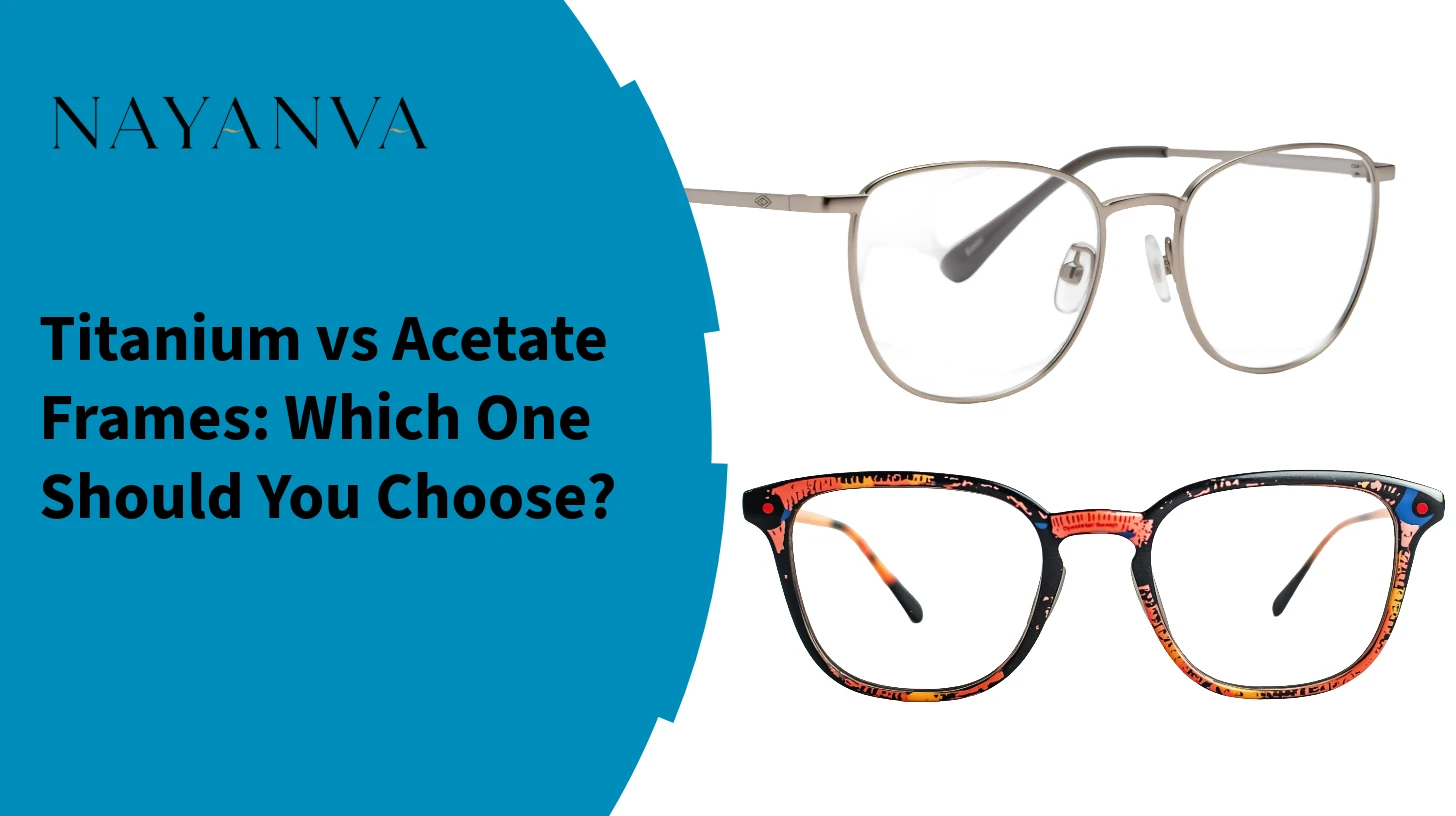

Quick Answer: Titanium frames are lighter, more durable, and hypoallergenic – ideal for active lifestyles and sensitive skin. Acetate frames offer richer colors, bolder designs, and a warmer aesthetic at a lower price point. Neither is universally better; the right choice depends on how you live, what you value, and what you’re willing to spend.
Frame material is one of those details most people don’t think about until their glasses break, cause a skin reaction, or feel uncomfortable after an hour of wear. But it’s actually one of the most consequential choices you’ll make when buying eyewear.
Titanium and acetate are two of the most popular premium frame materials available, and they’re quite different in every meaningful way – how they feel, how they look, how long they last, and what they cost.
What Is Acetate?
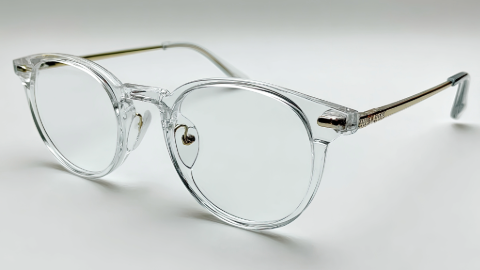
Acetate (technically cellulose acetate) is a plant-derived plastic that’s been used in eyewear since the mid-20th century. Unlike cheaper injection-molded plastics, acetate is cut from layered sheets, which allows for complex color patterns, translucency effects, and depth.
That’s why acetate frames look the way they do – those tortoiseshell patterns, marbled effects, and gradient transitions aren’t printed on. They run through the entire thickness of the material.
Acetate Characteristics
- Warm, rich colors and patterns
- Thicker, more substantial feel
- Can be reshaped with heat – useful for adjustments
- Lighter than standard metal frames but heavier than titanium
- Generally more affordable than titanium
- May cause reactions in people with sensitive skin (relatively uncommon)
What Is Titanium?
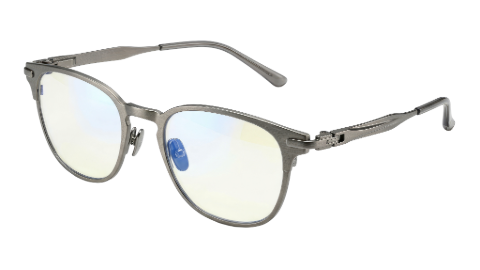
Titanium in eyewear is either pure titanium or a beta-titanium alloy. It’s the same material used in aerospace engineering and surgical implants. Titanium frames are extraordinarily strong relative to their weight, corrosion-resistant, and biocompatible (safe for sensitive skin).
Titanium Characteristics
- Extremely lightweight – the lightest metal used in eyewear
- Highly durable and flex-resistant
- Completely hypoallergenic – no nickel, no skin reactions
- Corrosion resistant – won’t rust or degrade from sweat
- Limited color range (usually matte greys, silvers, gunmetals, blacks)
- Higher price point
- Adjustable but doesn’t reshape as dramatically as acetate
Head-to-Head Comparison
Weight and Comfort
Titanium wins decisively. A titanium frame can weigh as little as 10–15 grams. Acetate frames typically weigh between 25–35 grams. That difference sounds small, but after six to eight hours of wear, it becomes very noticeable. If you wear glasses all day, every day, this matters more than almost anything else.
Durability
Both materials are durable, but in different ways. Titanium resists bending and returns to shape after flexing – it has a kind of memory metal quality. Acetate is thicker and absorbs impact differently. A dropped pair of acetate frames is less likely to bend immediately, but can crack on hard surfaces. For active lifestyles, titanium has a real edge.
Hypoallergenic Properties
This is where titanium has a clear, non-negotiable advantage for certain people. Many cheaper metal frames contain nickel, which causes skin reactions in roughly 10–15% of the population. Titanium contains no nickel and is completely inert against skin.
Style and Aesthetics
Acetate is richer, bolder, and more visually expressive. The layered manufacturing process allows for colors and patterns that can’t be replicated in metal. If you want a statement frame – emerald green, warm honey tortoiseshell, opaque cobalt – acetate is where you’ll find it.
Titanium frames tend toward minimalist, precision-engineered aesthetics. For professional environments or styles that value subtlety, this is a feature, not a limitation.
Price
Quality acetate frames: ₹2,500 – ₹12,000. Premium titanium frames: ₹6,000 – ₹25,000+. Japanese titanium frames (Masunaga, Kamemannen) and European titanium brands command premium prices for good reason.
Full Comparison Table
| Feature | Titanium | Acetate |
| Weight | Very light (10–20g) | Moderate (25–35g) |
| Durability | Excellent – flex resistant | Good – can crack under impact |
| Hypoallergenic | Yes – 100% nickel-free | Usually yes, some exceptions |
| Color / Pattern Range | Limited – mostly neutrals | Extensive – rich patterns possible |
| Style Aesthetic | Minimalist, precision | Expressive, bold |
| Adjustability | Moderate | Excellent |
| Price Range | Higher | More accessible |
| Best For | All-day wear, sensitive skin, active lifestyles | Style-first buyers, fashion frames |
Who Should Choose Titanium?
- People who wear glasses 10+ hours daily
- Anyone with nickel allergy or sensitive skin
- Professionals who want an understated, premium look
- Frequent travelers and active people
- Those building a long-term investment piece
Who Should Choose Acetate?
- People who prioritize style and visual expression
- Those looking for fashion-forward or seasonal frames
- Budget-conscious buyers who want quality construction
- Anyone who wants to match frames to wardrobe or personality
- People who change glasses frequently
Expert Tips
If you want the best of both worlds, look for combination frames – titanium temples with acetate fronts. You get structural lightness with visual richness.
For beta-titanium (memory titanium): these alloy frames spring back from extreme bending – excellent for children’s frames or very active wearers.
When buying acetate, ask about the acetate source – Italian Mazzucchelli acetate is considered the gold standard for quality and color depth.
FAQ: Titanium vs Acetate Frames
Are titanium glasses worth the extra cost?
For all-day wearers, yes – the weight difference alone justifies the premium. If you primarily wear glasses for reading or short periods, acetate may serve you just as well at lower cost.
Can acetate frames be repaired if they snap?
Yes, in many cases. A skilled optician or frame repair specialist can bond acetate frames, though the repair point may be visible. Titanium frames rarely snap but can be bent back into shape more easily.
Are acetate frames plastic?
Acetate is technically a plant-derived plastic (cellulose acetate), but it’s a completely different class of material from cheap injection-molded plastic. The difference in feel, quality, and longevity is substantial.
Which frame material is most durable?
Titanium tends to be more durable against everyday wear and flexing. However, very high-quality acetate from brands like Mazzucchelli is also remarkably durable if properly cared for.
Key Takeaways
- Titanium is lighter, stronger, and hypoallergenic – the better technical choice for all-day wearers
- Acetate offers superior aesthetics, more color choices, and easier adjustments
- Both are excellent quality materials; the choice comes down to lifestyle and priorities
- Combination frames (acetate front + titanium temples) offer a good middle ground
- Price isn’t always an indicator of material quality – look for specific material labeling.
This article is for informational purposes only and does not constitute medical advice. Please consult a qualified eye care professional for personalised guidance.
We strive to keep our content accurate and up to date, but information may change over time. Please verify important details with official sources or eye care professionals.



Thank you for sharing this information
Great comparison! Very informative and easy to understand. For quality titanium and acetate frames, you can also check out Lenstick
[…] They Really Work? June 14, 2026 How to Choose Eyeglasses Online Without Making Mistakes June 14, 2026 Titanium vs Acetate Frames: Which One Should You Choose? June 14, 2026 […]