







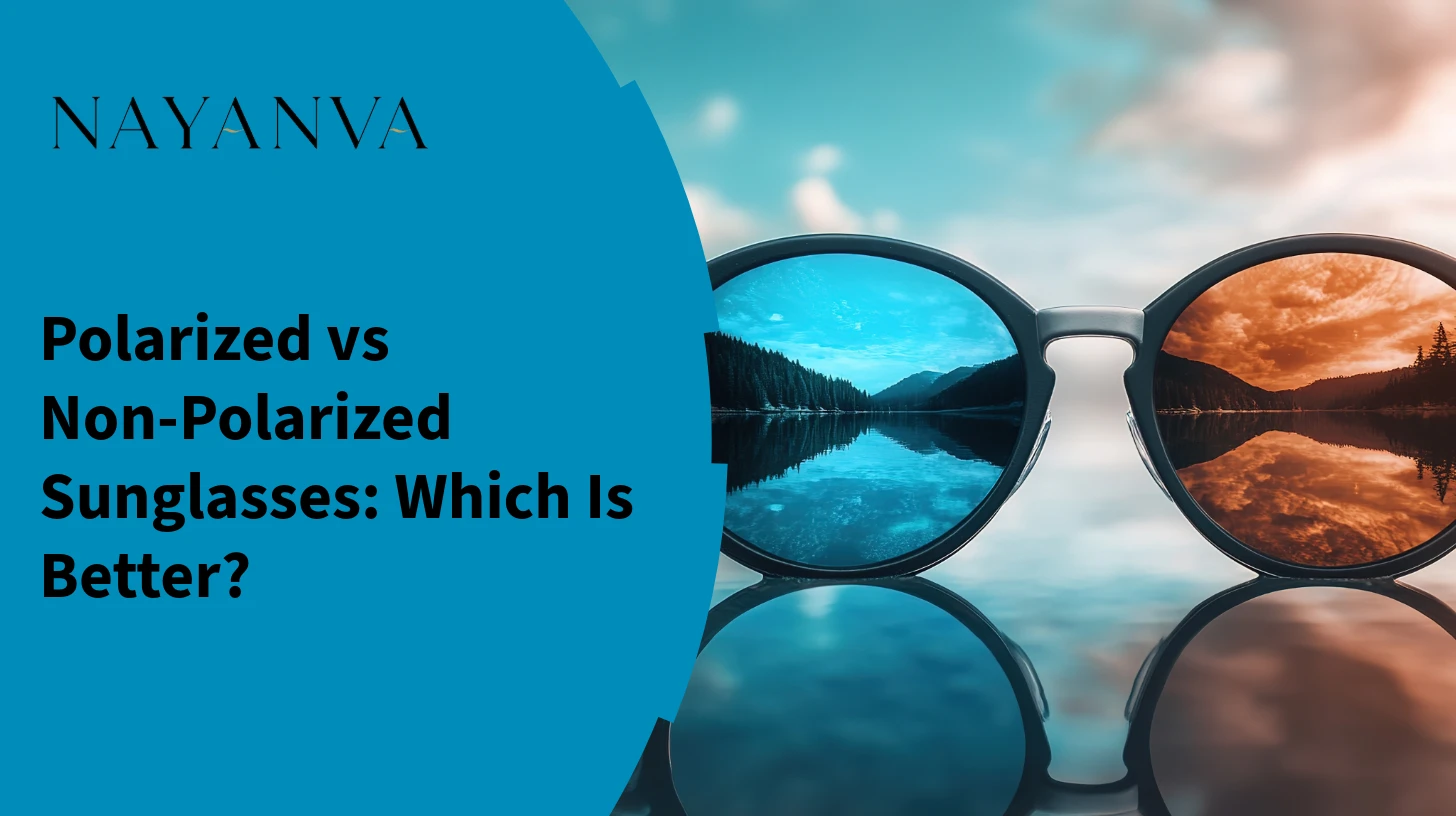

Quick Answer : Polarized sunglasses contain a filter that blocks horizontally reflected glare from water, roads, and snow – making them significantly better for driving, fishing, and outdoor activities. Non-polarized lenses reduce overall light without targeting glare specifically. For most everyday outdoor use, polarized lenses offer a meaningful functional advantage.
If you have ever squinted across a wet road or a glittering lake and wondered why your sunglasses were not helping much, there is a good chance they were non-polarized. The difference between the two technologies is not subtle – when conditions call for polarized lenses, you feel it immediately.
But non-polarized sunglasses are not automatically inferior. There are specific situations where they are genuinely the better choice. This guide breaks down what polarization actually does, where each type performs best, and how to choose between them.
How Polarization Works
When sunlight bounces off horizontal surfaces – water, wet roads, snow, car bonnets it reflects in a horizontal plane. This concentrated horizontal light is what we experience as glare: blinding, visually fatiguing, and sometimes genuinely dangerous.
A polarized lens contains a vertical chemical filter. This filter physically blocks horizontal light waves while allowing vertical light through. The result: glare is dramatically reduced while overall visibility is maintained or improved.
A non-polarized lens uses tinted or coated material to reduce the total amount of light reaching your eyes – evenly across all angles. It makes things darker, but does nothing about the specific character of glare.
Expert Tip
To test whether sunglasses are polarized in a shop: hold them horizontally, then rotate 90 degrees while looking at a reflective surface. If glare disappears at one angle and returns at the other, they are polarized. If brightness just stays constant throughout, they are not.
Head-to-Head Comparison
| Factor | Polarized | Non-Polarized |
| Glare reduction | Excellent – blocks horizontal reflected glare | None – only reduces overall brightness |
| Visual clarity | Higher contrast, crisper detail in bright conditions | Reduced but accurate brightness |
| Driving | Strongly recommended – cuts road and wet-surface glare | Adequate but not optimal |
| Fishing / water sports | Essential – reveals below-surface visibility | Limited – surface glare remains |
| Snow sports | Very effective against snowfield glare | Adequate for mild conditions |
| Digital screen use | Can interfere with LCD screens | No interference whatsoever |
| Cost | Typically higher | More affordable |
| Pilot use | Not recommended – can obscure instruments | Recommended for aviation |
| UV protection | Separate feature – check for UV400 label | Separate feature – check for UV400 label |
Where Polarized Sunglasses Excel
Driving
Wet roads are one of the most common sources of dangerous glare. Polarized lenses cut through that surface reflection significantly, making it easier to see lane markings, pedestrians, and road hazards. For detailed advice on choosing sunglasses specifically for driving – including tint colour, lens category, and frame geometry – the guide on Best Sunglasses for Driving: Features That Actually Matter covers all of it.
Water Activities
Anglers have known this for decades: polarized sunglasses allow you to see through water’s surface rather than bouncing off it. You can spot fish, rocks, and depth changes that would be invisible with non-polarized lenses. For kayaking, sailing, or simply beach days, polarized lenses eliminate the grinding visual fatigue from constant water glare.
High-Altitude and Snow Environments
Skiing, snowboarding, and mountaineering expose you to intense reflected light from snow and ice. Polarized lenses help significantly here. One caveat: some dedicated ski goggles use contrast-enhancing tints rather than polarization to maintain depth perception on uneven terrain – worth knowing if you switch between sunglasses and goggles.
Where Non-Polarized Sunglasses Are the Better Choice
Pilots and Aviation
This is not a preference – it is a safety requirement. Polarized lenses can interfere with cockpit instrument display visibility and can mask the iridescent sheen of oil or ice on runways. Pilots use non-polarized lenses, and aviation authorities globally recommend it.
Working with Digital Screens
Many LCD and LED screens emit light in patterns that interact with polarized filters, creating dark patches, rainbow effects, or visibility issues at certain angles. If you work on a laptop outdoors, use a phone in bright light, or attend events with large LED screens, non-polarized lenses maintain clear visibility without distortion.
Fashion and Casual Everyday Use
For sunglasses worn primarily for fashion or brief outdoor periods – a lunch walk, casual errands, outdoor dining – the premium of polarization may not be justified. A quality non-polarized lens with proper UV400 protection serves perfectly well.
Expert Tip
A persistent misconception: darker tint does NOT mean better UV protection. A non-polarized lens can be very dark and offer zero UV protection. Always check for UV400 marking separately, regardless of lens darkness or polarization status. For the full explanation, see the Nayanva guide on UV Protection in Sunglasses Explained.
UV Protection: Where Both Lens Types Stand
Polarization and UV protection are entirely separate features. Polarization addresses glare; UV400 protection addresses ultraviolet radiation – the kind that contributes to cataracts, macular degeneration, and photokeratitis. Both polarized and non-polarized lenses can offer full UV400 protection, or neither might, depending on lens quality.
This is precisely why buying from reputable sources matters. Cheap fashion sunglasses with dark tints and no UV protection are worse than no sunglasses at all – the dark tint dilates the pupils while doing nothing to block the UV that now has easier access.
Are polarized sunglasses worth the extra cost?
For active outdoor users – drivers, anglers, hikers, beach-goers – yes, genuinely worth it. The glare reduction translates to less eye fatigue and better visual clarity in the conditions where it matters most. For primarily fashion use or minimal outdoor time, non-polarized with good UV400 protection is perfectly adequate.
Can polarized lenses hurt your eyes?
No – polarized lenses cause no harm to eyes. They can create mild distortion on LCD screens or some car windshields with defrosting grids, but pose no health risk. Some wearers take a day or two to adjust to the heightened contrast.
Do polarized sunglasses block UV rays?
Not inherently – UV protection is a separate lens property. Most quality polarized sunglasses include UV400 protection, but verify this on the product listing. It is not automatic.
Can I get polarized prescription sunglasses?
Yes – polarized lenses are widely available in prescription formats including single vision, bifocal, and progressive. They cost more than standard tinted prescription lenses, but the functional benefit is fully retained.
Why can’t pilots wear polarized sunglasses?
Polarized lenses can interfere with cockpit LCD displays and can obscure visual cues like the sheen of ice or oil on surfaces. Aviation organisations including the FAA strongly discourage polarized lenses for pilots for these safety reasons.
Do polarized sunglasses reduce visibility in low light?
Yes. Polarized lenses are not ideal for dawn, dusk, or heavily overcast conditions. In low ambient light, glare reduction matters less, and the darker appearance of most polarized lenses can hinder visibility. Yellow or lighter lenses work better in low light.
Key Takeaways
- Polarized lenses block horizontal reflected glare; non-polarized lenses simply reduce overall brightness.
- For driving, fishing, water sports, and bright outdoor activities, polarized lenses offer a clear functional advantage.
- Pilots, LCD screen users, and those prioritising cost have valid reasons to choose non-polarized.
- UV protection (UV400) is entirely separate from polarization – check for it regardless of lens type.
- Dark tinted lenses without UV protection are worse than no sunglasses at all.
- Polarized prescription sunglasses are available and worth considering for active outdoor prescription wearers.
This article is for informational purposes only and does not constitute medical advice. Please consult a qualified eye care professional for personalised guidance.
We strive to keep our content accurate and up to date, but information may change over time. Please verify important details with official sources or eye care professionals.



[…] & Flatter June 16, 2026 Best Glasses for Oval Face Men: Complete Style Guide 2026 June 16, 2026 Polarized vs Non-Polarized Sunglasses: Which Is Better? June 15, 2026 […]
[…] & Flatter June 16, 2026 Best Glasses for Oval Face Men: Complete Style Guide 2026 June 16, 2026 Polarized vs Non-Polarized Sunglasses: Which Is Better? June 15, 2026 […]